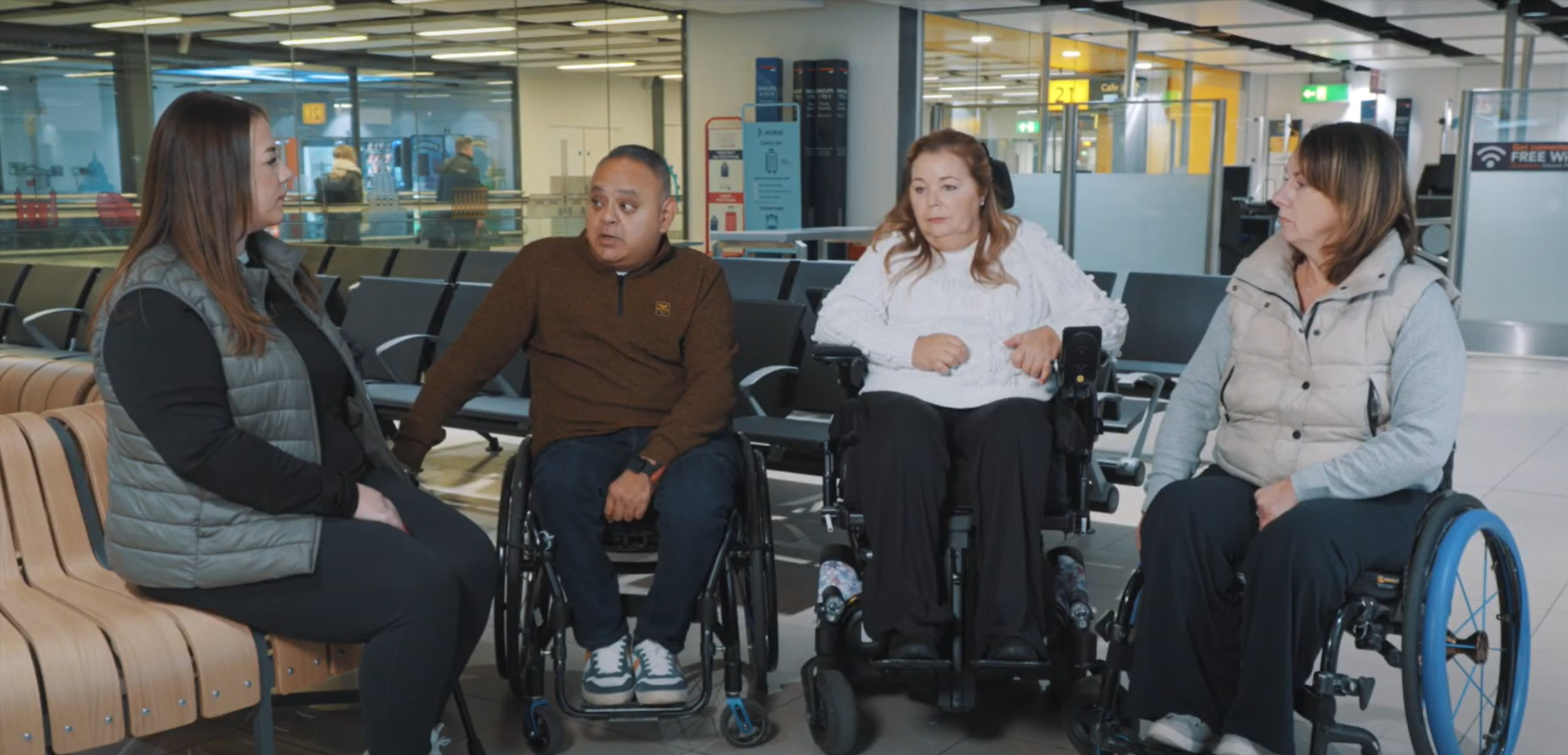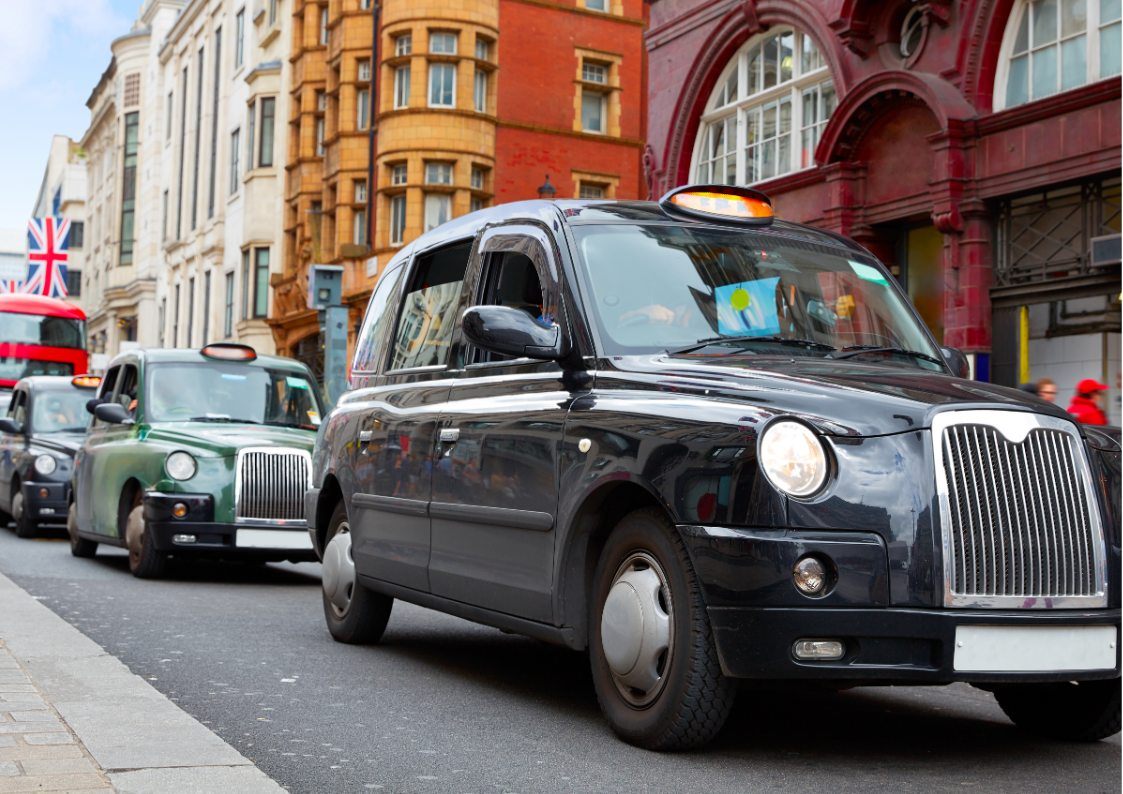


Travelling by taxi can provide flexibility and independence for people with a spinal cord injury. It can also be helpful if you don’t plan to return to driving or if you’re still waiting to get an adapted vehicle of your own.
Planning ahead and knowing your rights can make the experience feel safer and more comfortable. This information sheet aims to take you through the process and will consider all types of taxis including:
- black/Hackney cabs
- pre-booked taxi/mini cabs
- other options (e.g. Uber/BOLT)
Planning your journey
Preparation for your journey is key, and it can be helpful to think about your journey in detail. Things to consider include:
- Are the journey and destination familiar to you?
- Will your journey involve multiple stops?
- What is your final destination, and which facilities will be available to you there?
- Are you able to pre-book your taxi or will you be getting a taxi spontaneously?
We’re aware there can be regional discrepancies throughout the country, and it can often be more challenging to find an accessible taxi in rural areas, compared to city locations.
It can be helpful to get to know your local taxi companies and develop a relationship with them so they can understand your individual needs. Add their contact details to your phone for ease. Ask other people with spinal cord injury for details of recommended companies. You could either do this online through Facebook groups, such as SCI Owners Club, or in person at your local SIA community support group.
Booking a taxi
It’s useful to think about what you need before booking your taxi. Things to consider might be as follows:
- Do you need a standard car or a wheelchair accessible vehicle?
- Are you planning to stay in your wheelchair or transfer out of it?
- Do you need extra space for any other equipment, mobility equipment or to store your wheelchair?
- How does your wheelchair need to be secured when travelling?
- Will you require any assistance to transfer into and out of the wheelchair or to secure your wheelchair or store your equipment?
You might choose to pre-book a taxi, either by telephone or via an app, to allow you to feel more prepared. In some places, particularly larger cities, you should find it easy to hail an accessible taxi, which allows for more spontaneity.
Some app-based booking services have specific settings/options to book accessible vehicles, such as Uber Assist (when you need additional support with your mobility) and Uber Access (for a wheelchair accessible vehicle).
What are my personal care needs preparing for and during travel?
Think about your journey and destination and the facilities available to you and plan accordingly. Consider taking a supply of personal care products such as catheters, wipes and gloves in a bag with you in case. Finding accessible toilet facilities can sometimes be difficult but there are useful apps/websites such as Changing Places Toilets, Flush Toilet finder app and AccessAble.
Think about your comfort during the journey. If you’re staying in your wheelchair then think about whether you need to adjust your seating and cushion for pressure relief and comfort. Think about how your wheelchair will be secured during the journey.
On a longer journey, you may need to think about whether you need to take breaks to carry out pressure relief. Think about how to maintain your temperature during the journey; you may need to ask the driver to adjust the heating or air conditioning.
What are my mobility equipment needs?
Before travelling, take some time to think about any equipment you might require during your journey and once you arrive.
Walking stick/elbow crutches – most sticks and crutches will fit in a taxi. You may need to put them in the boot, so discuss this with the driver if you need assistance with this.
- Walking frame – it’s likely this will need to be transported in the boot of the vehicle. It can be useful to know the dimensions of your frame and whether it can be folded or parts removed for easier storage. If you’re pre-booking a taxi, then discuss this with the company on booking to make sure the vehicle can accommodate your walking frame.
Manual wheelchair – think about whether you’ll transfer out of your wheelchair or remain in it to travel.
- If you stay in your wheelchair, then you need to book a wheelchair-accessible vehicle with ramp. It can be useful to know the dimensions of your wheelchair, including your overall height when sat in the wheelchair. It’s also useful to know the ‘tie down’ points on your wheelchair so that your wheelchair can be secured safely with the appropriate restraint system.
- If you plan to transfer out of your wheelchair, then think about how you’ll do this and whether you’ll need any other equipment such as a transfer board. You may not usually use one but remember that the car you’ll be transferring into will be unfamiliar to you. It can be useful to let the company know (if you’re pre-booking) if you’ll require assistance to store your wheelchair after you’ve transferred. Be confident in how to instruct someone to fold and store your wheelchair.
Powered wheelchair – you’ll need to remain in your wheelchair to travel in a taxi, so book a wheelchair-accessible vehicle. It can be useful to know the dimensions of your wheelchair, including your overall height in your wheelchair, to make sure that you can be accommodated in the taxi. It’s useful to know the ‘tie down’ points on your wheelchair so that your wheelchair can be secured safely with the appropriate restraint system. If you’re unsure, then check the manufacturer’s website for this information.

Safety in the taxi
It’s important you feel safe and comfortable when travelling. Here are some points to consider as part of your journey planning. You’ll see some are required; others are a matter of preference.
- Always use the seatbelt, whether seated in your wheelchair or transferred to a seat.
- Check that the wheelchair tie-downs and restraint system are used correctly.
- Secure any loose equipment such as cushions and bags.
- You may need to use a headrest when travelling, even if you don’t need one day to day.
- Where possible, agree the fee for the journey in advance or ask for an idea of the cost before travelling.
- Check the payment method for your taxi journey to ensure you’re prepared.
- If you feel it’s necessary, let someone know when / where you’ll be travelling.
Your Rights
It’s against the law for drivers not to take you on a journey because of a disability or for bringing an assistance dog. It’s also against the law for taxi and minicab operators not to book a vehicle for you for those reasons.
If there are vehicles available and they refuse to take you because of your disability, the driver or operator could be fined up to £1,000 or lose their licence. This is set out in The Taxis and Private Hire Vehicles (Disabled Persons) Act 2022.
If problems do occur:
- Keep the taxi company’s number handy in case of issues.
- Note the driver’s ID or licence number if you need to make a complaint.
- Report accessibility issues to local transport authorities if necessary.
Don’t forget, you can always call the SIA support line for advice if you experience any access problems with taxi travel.