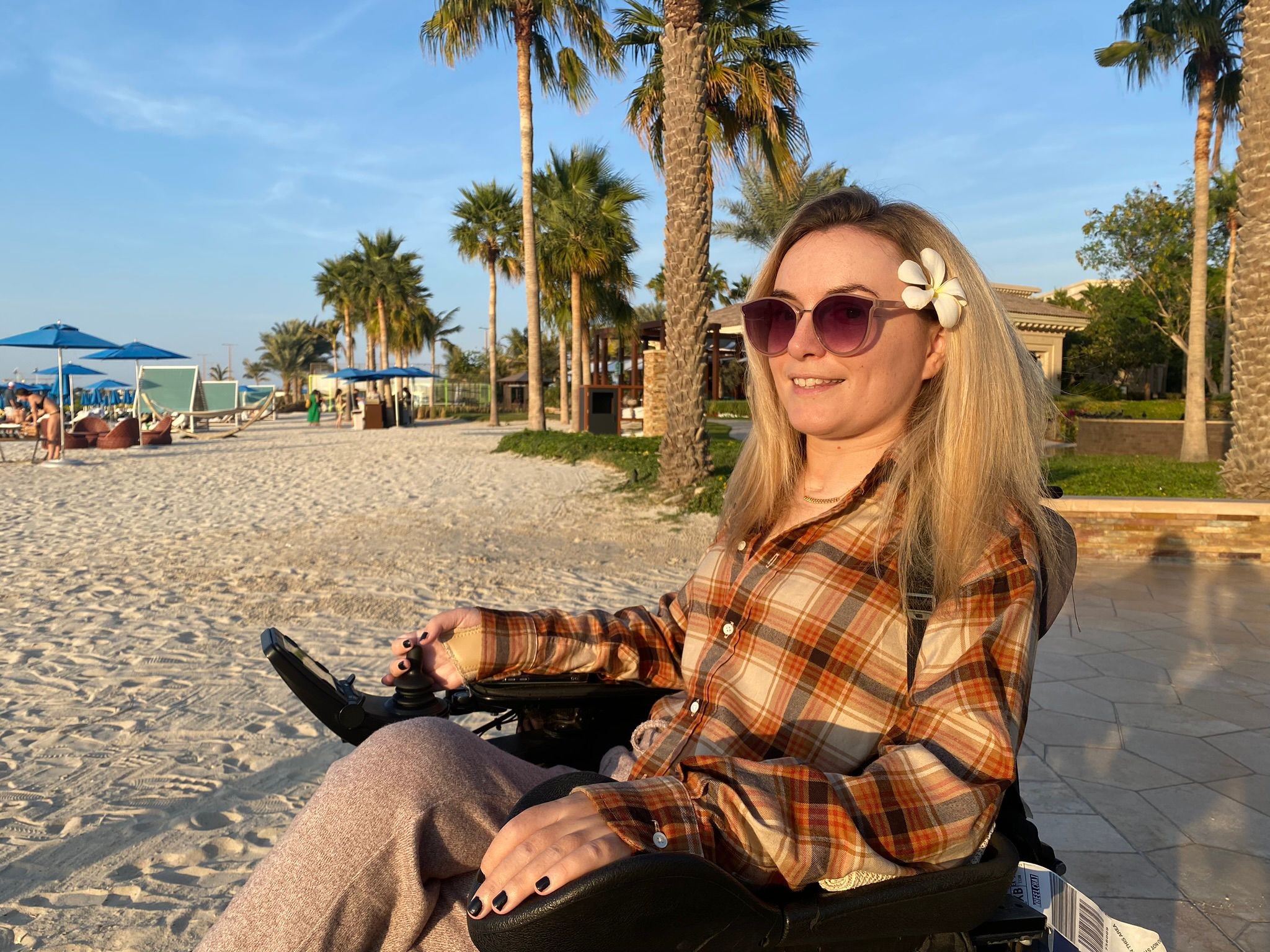


Having last been to Barcelona as a non-disabled person, SIA member Lizzie Tench decided to put it to the test as a wheelchair user by going to Primavera Sound, a music festival held in the city. Travelling with her partner, who is also a wheelchair user, Lizzie shares her experience of beautiful Barcelona
Flights and transfers
We flew direct from Manchester with Jet2. My opinion is that flying is a necessary evil and often tricky if you’re taking additional powered devices, but I do find Jet2 is one of the better low-budget airlines. We booked a private airport transfer with Holiday Extras – doing this usually works quite well, but a tip would be to contact them in advance and push your pickup time back by half an hour to allow for the extra time it takes them to get you off the plane (otherwise drivers often get stressed and impatient as they have other jobs afterwards and parking concerns). Similarly, I’d recommend requesting an earlier pick up from your hotel for your return journey to allow for the additional time you will need with the logistics of being a wheelchair user at the airport.
Accommodation
We stayed at a hotel close to Plaça de Catalunya and La Rambla. Although it was a good location, close to the centre, the access was quite poor and we struggled with the lift and the shower. If we went to Barcelona again (which we will), we’d probably stay somewhere else, but worth noting here that it’s important to really check those details before booking.
The festival
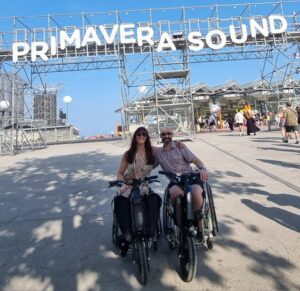
To obtain disabled access for Primavera Sound, you need to fill out the accessible ticket request form on their website and await a response. You will be able to buy a reduced price ticket and receive information on how to get your ‘person with reduced mobility wristband’. You’ll have access to facilities such as viewing platforms and accessible toilets, fast-track entry and be able to access shortcuts reserved for VIPs. One great thing about this festival is that it is mostly on hard-standing ground rather than grass, and there isn’t any camping, so you can stay in the city with a flushing toilet and a shower! I rate the festival highly for its wheelchair accessibility (if you don’t mind Portaloos). It’s so easy to get around, especially if you have power assist (there are some hills), and two of the main stages run side by side alternately so you can sit on the viewing platform and see many different acts. It is situated on the coast, so it can get a bit chilly and breezy at night but not compared to UK festival weather by any means.
TOP TIP: You’ll need to get a Nimbus Access Card that states you are entitled to a free companion (before buying your ticket) in order to take a companion to the festival.
Getting around
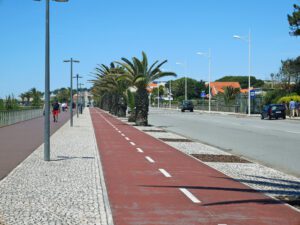
Most of the public transport in Barcelona is wheelchair accessible. The buses run 24 hours a day, the metro runs between 5am and 12 midnight from Sunday to Thursday, from 5am to 2am on Friday, and 24 hours on Saturday. The metro system consists of 165 stations, and only 12 of these are not accessible. My partner and I travelled to and from the Primavera Sound festival on our power add-ons, and we used the many cycle lanes in the city and travelled along the coast. It took approximately 45 minutes from our hotel but was a beautiful trek.
The city
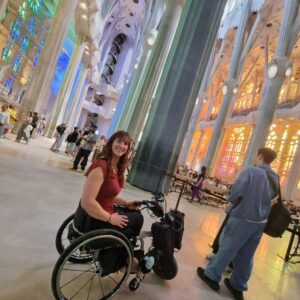
In terms of the city itself, I booked our sightseeing in advance, mostly through the Tiqets app. I would recommend prebooking your sightseeing as Barcelona is immensely popular with tourists all year round, and it will enable you to plan your itinerary and avoid queuing for tickets. I am a huge fan of Antoni Gaudí’s architecture, and we visited three of the Gaudí houses (Casa Batlló, Casa Milà AKA La Pedrera, and Casa Vicens), Park Güell (park designed by Gaudí) and La Sagrada Familia (Gaudí’s cathedral). All of these have wheelchair access, and you can take a companion. My favourite house is Casa Batlló. I’ve visited it twice and I would visit again. The façade is covered in multi-coloured ceramic shards and glass, and it has a roof resembling a dragon’s back. It is known as the house of colour and light, and it has an undersea theme. It is also an UNESCO World Heritage site. Much to my surprise and delight, I discovered that the Gaudí houses all have lifts, so you can visit pretty much all parts (apart from the whole of the roof at Casa Milà). Whatever you do, don’t miss La Sagrada Familia as it is an astounding and breathtaking piece of architecture. Take your headphones/earbuds as you can download the guide on the Sagrada Familia app on your smartphone and listen/read as you go around. Disabled people get reduced entry rates in Barcelona and you can skip queues everywhere. Take your Access Card or photographs of both sides of your Blue Badge, which will prove that you are disabled (I’ve had this questioned before in Spain despite being a fulltime wheelchair user). Be aware that the approach to Park Güell is incredibly steep. We just about managed it on the main road with power add-ons, but I’d recommend a taxi or public transport if you’re concerned. The park is on a steep hill too, so wheelchair users will probably need power assist, or a fit and willing person to push.
Activities
There are many accessible activities across the city that we didn’t have time for. Several of the beaches have accessible facilities and beach wheelchairs. There are plenty of bike, electric bike and electric scooter hire shops for able-bodied travel companions. The hop-on/hop-off bus has one wheelchair space and is another great way of getting around the sites. There is also the Montjuïc Cable Car, Barcelona Zoo and daytime or sunset catamaran cruises with music. Plenty of accessible options! In summary, I would definitely recommend Barcelona as an accessible city. I didn’t have problems finding accessible toilets, and tourist spots cater for a wide range of access needs.

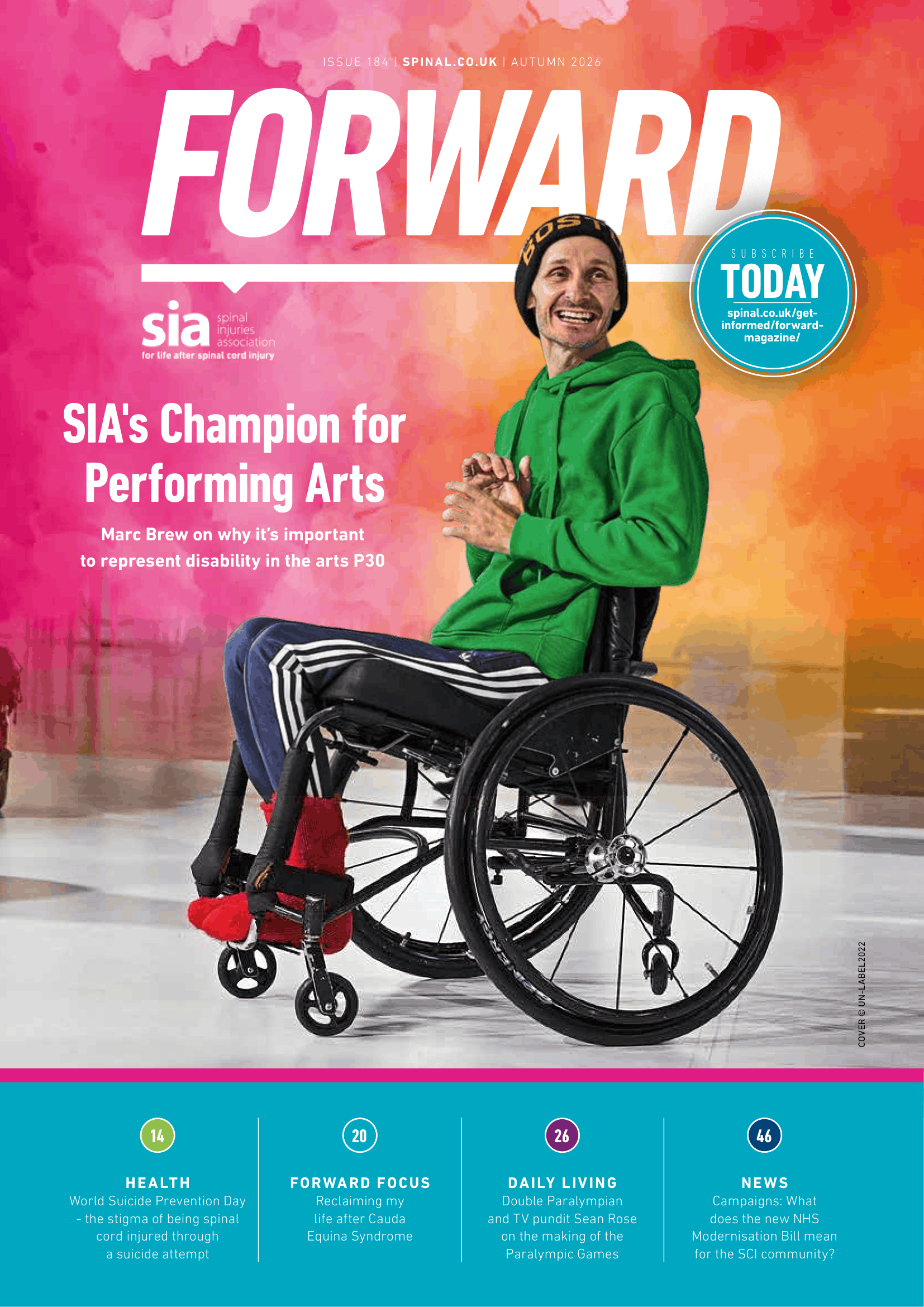 This article was featured in the Autumn 2026 issue of FORWARD, the only magazine dedicated to the spinal cord injury community.
SUBSCRIBE
Available either in traditional printed format or as a page-turning digital edition
- UK – £24 a year for print magazine, PDF only or PDF plus print
- Europe – £29 a year for print magazine, £24 for PDF only or £29 for print and PDF
- Overseas – £37 a year for print magazine, £24 for PDF only or £37 for print and PDF
We love to hear your ideas for stories and to let us know what you think of the magazine – so do get in touch by emailing [email protected]