

The Wheelyboat Trust has been helping make UK waterways available to disabled people for 40 years. Yet there’s still more to do says director Andy Beadsley who shared their story with us.
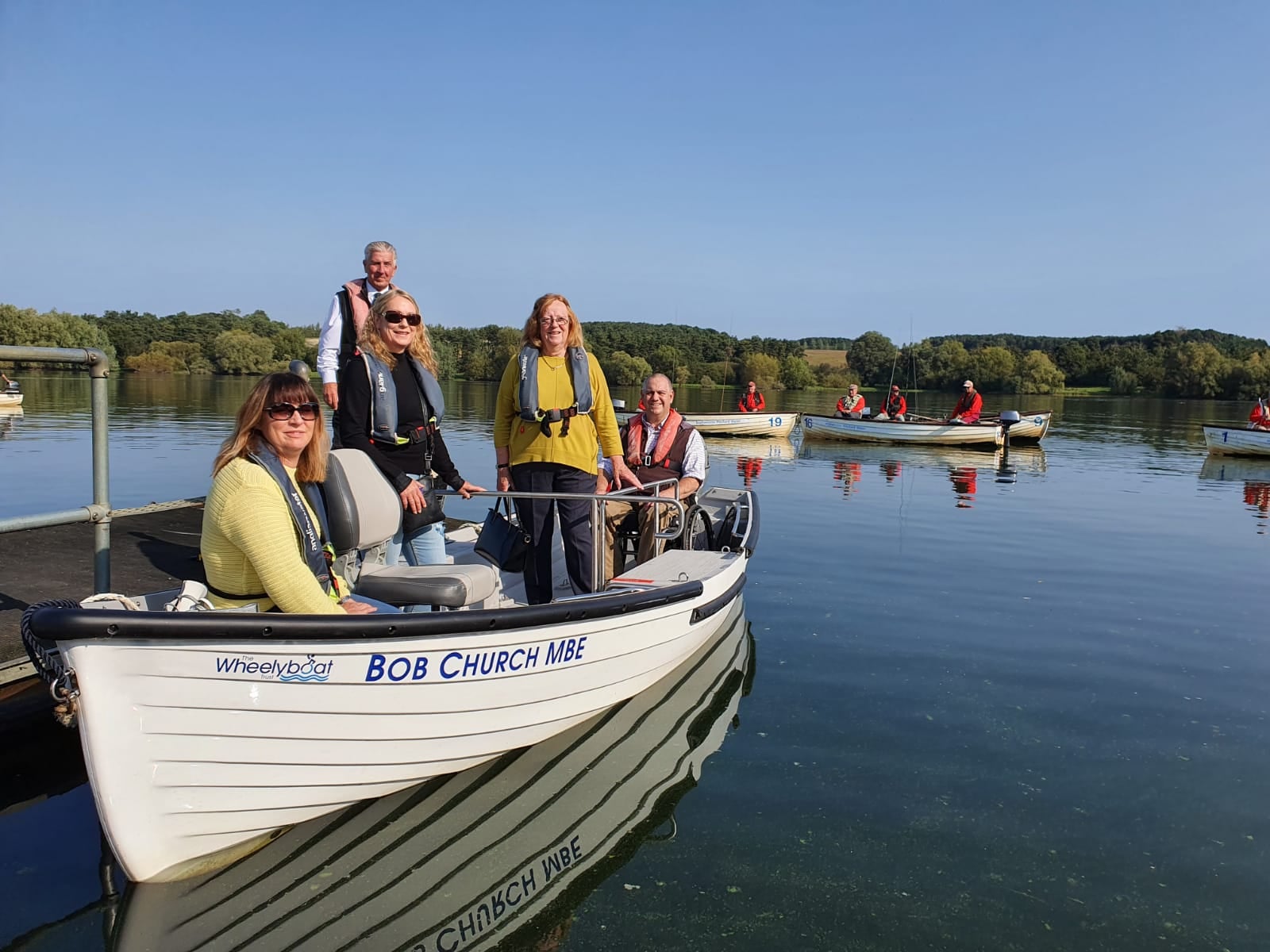
What are Wheelyboats? … Wheelyboats are wheelchair-accessible boats which allow disabled people of all ages independent access to activities on the water such as powerboating, nature watching, pleasure boating and angling. The boats are designed from scratch and built from the hull up to be wheelchair accessible.
It’s important you can fully participate when you’re out on the boat, whether that’s driving the boat or being a part of the crew. Being able to drive a boat from a wheelchair is one of the most important things incorporated into the boat design and an open cock pit gives you access to all corners of the boat. We want to give a lot more freedom of choice to users while on the water rather than just being a passenger.
Wheelyboats operate in most counties of the UK and Ireland. Operators include Sailability groups, sailing clubs, outdoor education centres, canal trusts and angling clubs.
Tell us about the work of the Wheelyboat Trust?
We help groups and organisations acquire Wheelyboats which best fit the needs of the members and visitors they operate on behalf of. Fundraising to support Wheelyboat projects is the most important and time-consuming aspect of our work; they’re hand-built to order, not mass-produced and consequently, they’re not inexpensive, ranging in price from around £14,000 for a small angling boat to £60,000 for our largest model.
Raising funds to discount their cost has always been our policy and helps ensure Wheelyboat supply and availability is maximised across the UK.
Last year was our 40th anniversary. We were originally called the Handicapped Anglers Trust when we were founded in 1984. One of the original founders was a wheelchair user and he and his friend wanted to find a way of continuing to fish together. Plans for a prototype accessible boat were developed and the first boat was officially launched by HRH Prince Charles in 1985.
In 2004 we changed our name to the Wheelyboat Trust, reflecting our broader aims and the demand for Wheelyboats for activities beyond fishing. 75% of boats we supply now are for powerboating, nature watching and pleasure boating.
The Wheelyboat Trust website tells us Wheelyboats can change lives. How so?
I can speak from experience. I’ve always been a very keen angler. I sustained a T5 complete spinal cord injury in 1982, just two months shy of my 18th birthday. When you become disabled, access to the water is difficult. I felt excluded from my favourite activity. What Wheelyboats enabled me to do was become a normal angler again.
Everyone has their own experiences of the doors Wheelyboats has opened to them whatever their activity on the water, whether that’s fishing, watching wildlife or haring about at 30mph in a power boat!
I got to know the work of the trust as a beneficiary and later began working for them – over 20 years ago now!
It’s nice being out on the water and getting a swan’s eye view. Our boats are open, so you get the wind in your hair and spray on your face. It’s very relaxing.
SIA’s community support groups operate across the country. How do we find out if there’s a Wheelyboat available for a group’s needs?
Wheelyboats are available to the public from the far north of Scotland to the west of Cornwall. Visit the locations section of our website to find out where the nearest Wheelyboats are to you: wheelyboats.org/wheelyboat-locations
The largest Wheelyboat we supply is 20ft long and can take up to 10 people in inland waters, or up to eight people on inshore waters.
What are future plans for The Wheelyboat Trust?
We know Wheelyboats have a huge impact on the lives they touch. Despite the thousands of miles of waterways and coastline around Great Britain, many disabled people don’t have access to a Wheelyboat. We want to increase opportunities for disabled people, and an increasingly elderly population, to benefit from getting into nature to improve their physical and mental health and well-being.
We want to enable more disabled people to participate equally in and benefit from outdoor activities alongside their able-bodied counterparts. To do this we need to accelerate the building and supply of Wheelyboats across the country and develop new and even more versatile models to meet the changing needs and aspirations of disabled people.
