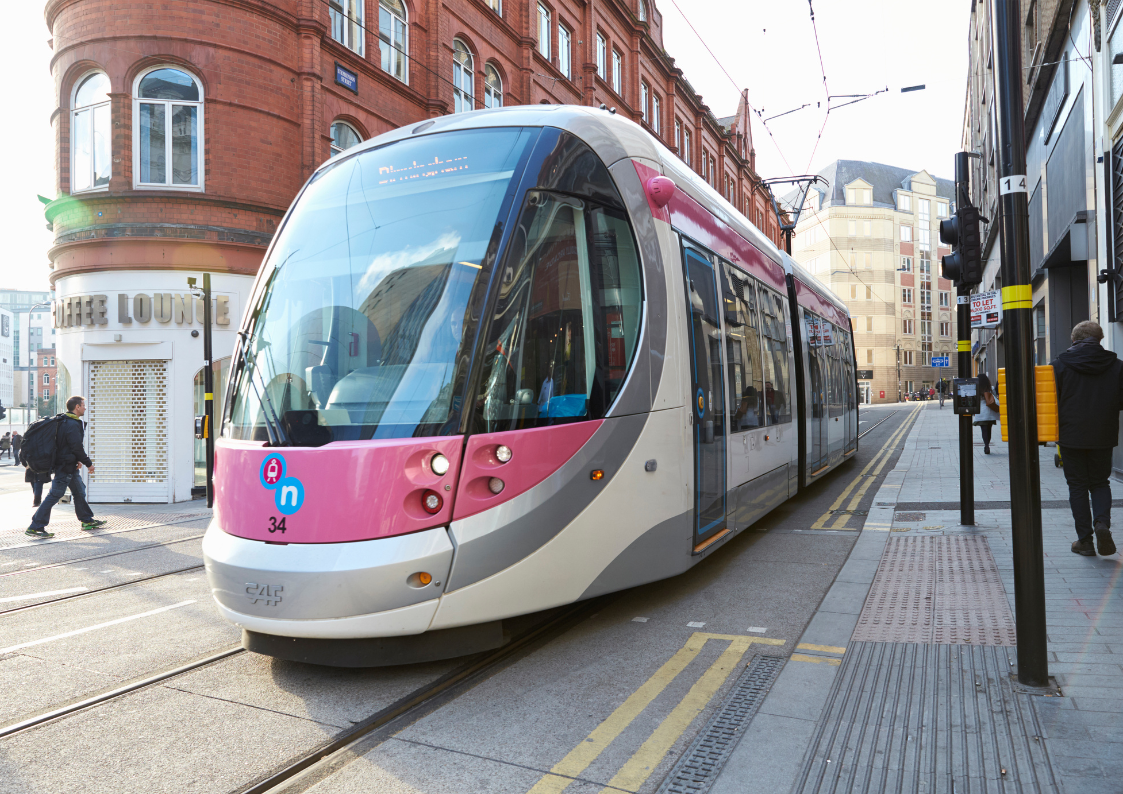
Trams are a popular way to get around in towns and cities and can be a convenient, affordable alternative to car or train travel. They offer level access at many stops, frequent services, and step-free boarding.
This webpage provides information for people with spinal cord injury (SCI) and Cauda Equina Syndrome (CES) when using tram systems. We’ll explain how to plan your tram travel, book tickets, and manage your equipment and personal needs during your journey.

Tram travel information sheet
Tram Services in the UK
Click on the links below to find out more about these services:
Planning your journey
Whether you use a wheelchair full-time, or part-time with walking aids, tram systems are generally designed to make travel safe and straightforward. Planning ahead will help your journey go smoothly. Here are some things to think about when planning a journey by tram.
- Most modern tram systems in the UK are accessible, with low-floor trams and level boarding at stops.
- Platforms may still vary – check the website of your local tram operator for detailed access information. Allow extra time for reaching the platform – some stops may involve slopes, crossings, or lifts.
- Check in advance if your local tram stops are step-free and have lifts if needed. Tram services’ websites or AccessAble guides are useful sources of information.

- If you drive, check whether there are Blue Badge bays at tram park & ride sites.
- Some tram systems require you to buy a ticket before boarding, using a ticket machine, app, or smartcard.
- Contactless payment is accepted on many networks – a good option if you find reaching a machine difficult.
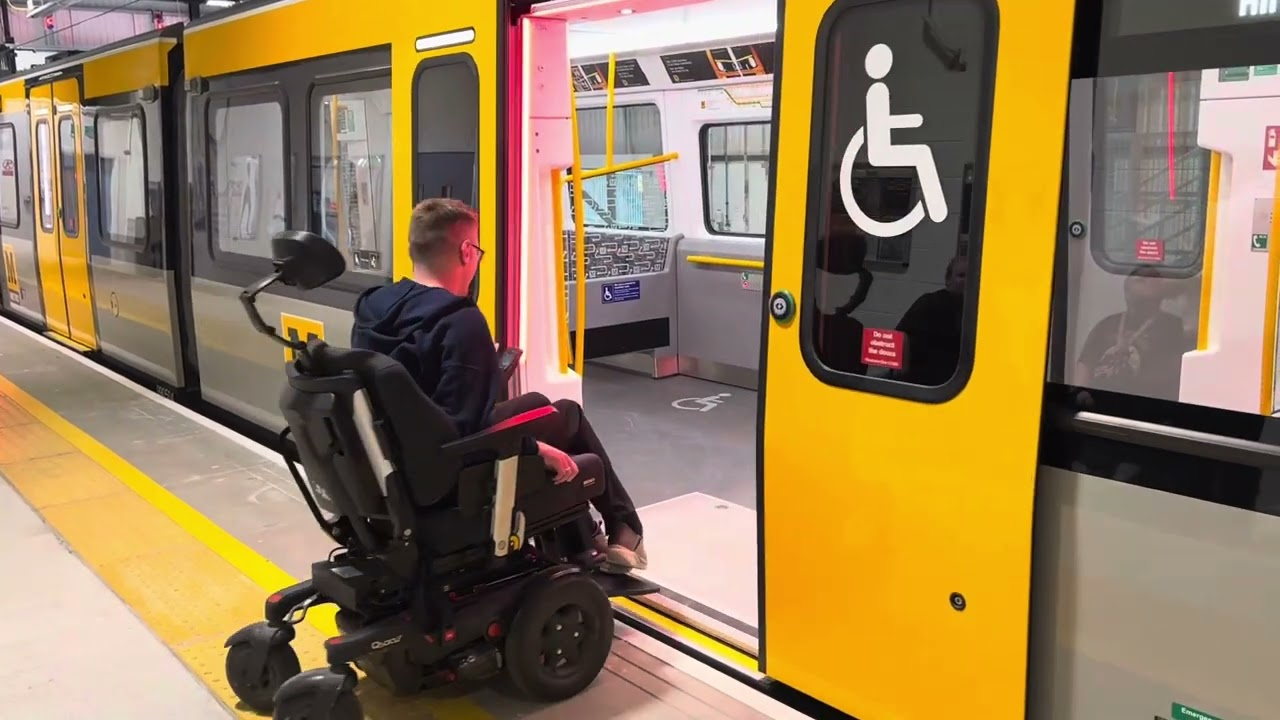
- There is usually a dedicated wheelchair space, on trams, which may only accommodate one or two wheelchairs per carriage. If the space is taken, you may need to wait for the next tram.
- If you are new to tram travel, try a short, local journey first to get used to boarding and seating.
Check the dimensions of your wheelchair to make sure it fits the allocated wheelchair space. Be prepared to reverse into the space and apply the brakes during travel.
Personal care needs
- Pack a bag with personal care supplies (catheters, leg bags, wipes, gloves), spare clothing, and any medication.
- Think about journey length and timing to plan your care routine to fit with this where possible.
- Most tram services do not have toilets on board. Check where accessible toilets are available along your route or at your destination.
For most accessible toilets, you’ll need a RADAR key
USING A RADAR KEY
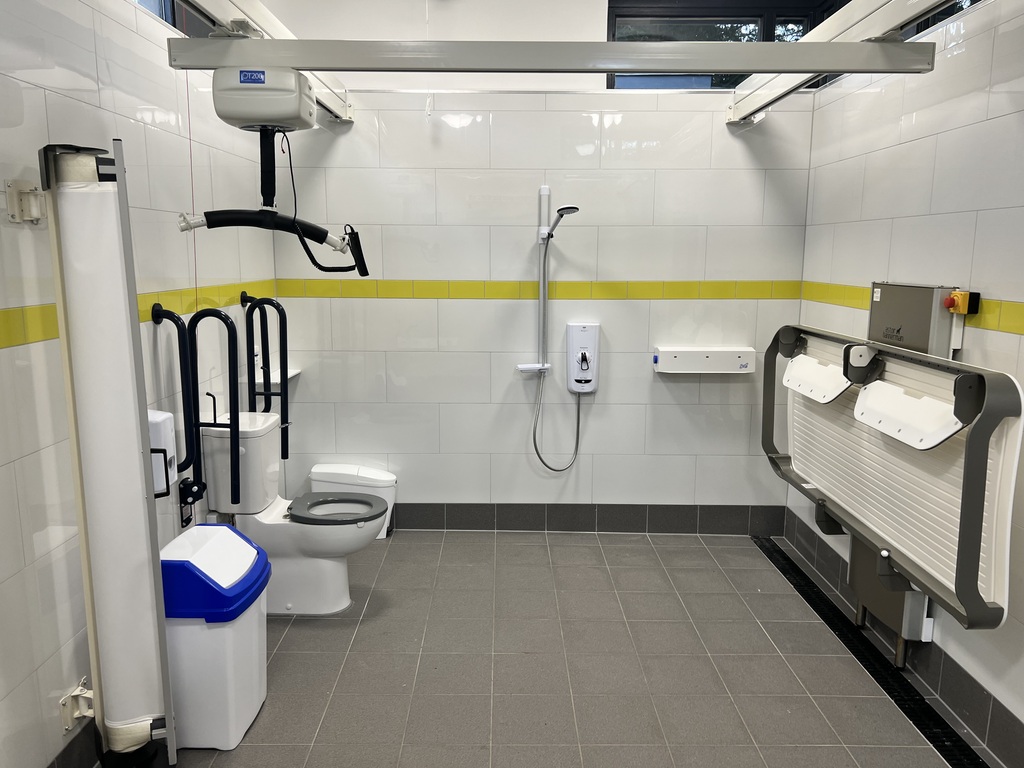
For longer days out, check Changing Places toilets along your route
CHANGING PLACES TOILETS
Plan ahead carefully, as moving from the tram stop to nearby facilities may take longer in a wheelchair. Allow extra time to avoid rushing.
Mobility and equipment needs
Preparing to travel
- Think about your energy levels, balance, and walking distance when deciding whether to take a wheelchair or walking aid.
- Some tram systems allow mobility scooters if they meet size and weight limits – always check in advance.
During the journey
- All wheelchair users must position their chairs in the marked wheelchair space and apply brakes.
- Some operators provide a strap or support bar for extra stability.
Be prepared for tram drivers to ask you to back into the wheelchair space. Apply brakes and avoid carrying heavy bags on your chair for safety.
Tickets and payment
Most tram systems operate on a ‘buy before you board’ rule. You can buy tickets at machines on the platform, via a mobile app, or with a smartcard. Staff are usually available at larger interchanges to help if needed.
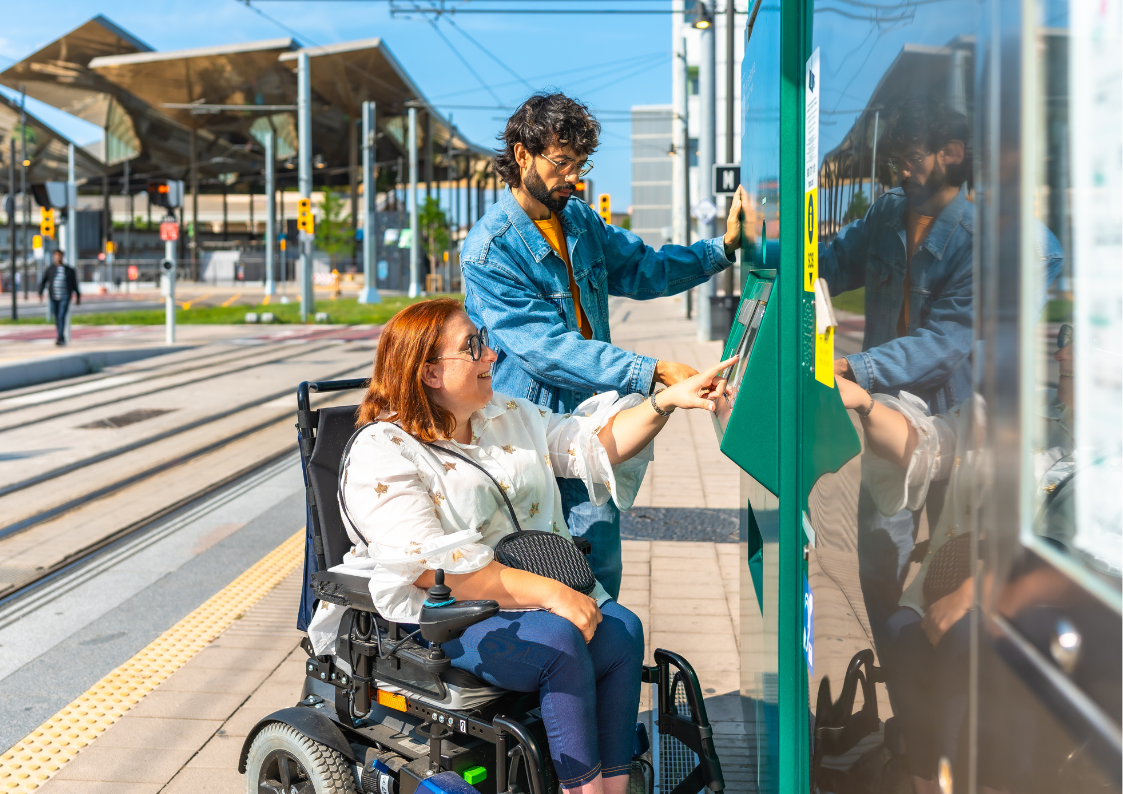
- Ticket machines: Most tram stops have machines at platform level. Many are designed to be accessible, with lowered screens, touchpads, and contactless options.
- Contactless payment: On many tram systems you can just tap in/out with your bank card or phone (check your operator).
- Mobile apps: Many operators (e.g. Manchester Metrolink, Nottingham, West Midlands Metro) offer mobile ticketing, which avoids queues and reaching machines.
- Concessionary passes: Check if your bus pass, railcard, or concessionary travel pass is valid on the tram. In many regions, disabled concessionary passes allow free or discounted tram travel.
- Some regions also offer a Companion Pass, so a friend, carer, or family member can travel with you at no extra cost.
- Ticket checks: Trams don’t always have barriers – instead, staff check tickets onboard. Keep your pass, card, or app handy.
Some machines are not at wheelchair-friendly height. Plan to use apps or pre-purchase tickets where possible.
Getting on board
- Most UK trams have level boarding from the platform. Occasionally there may be a small gap or step.
- Drivers are usually able to wait while you board safely and position yourself.
- Boarding can be busy at peak times – let other passengers know you need space.
How do I get assistance?
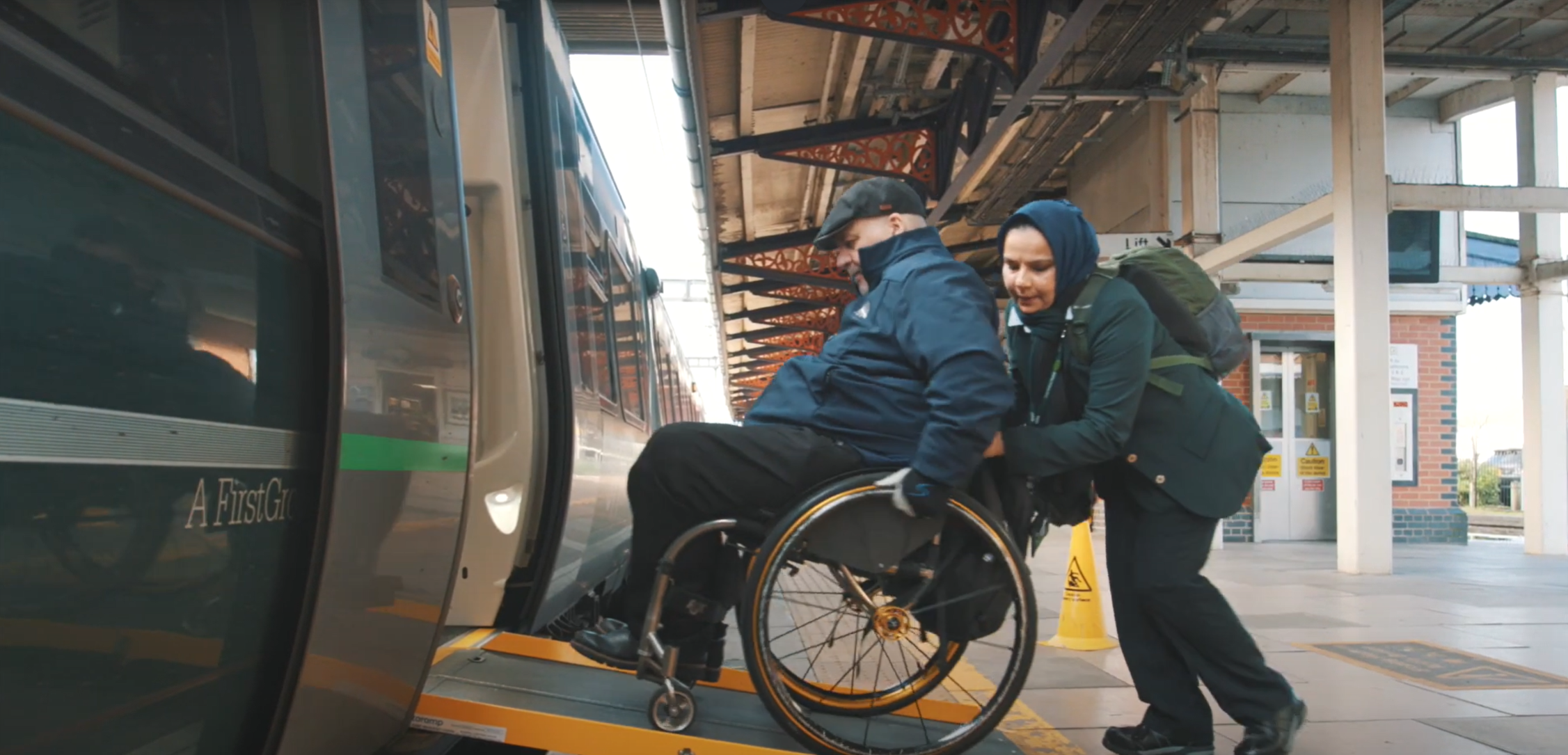
- Tram drivers and staff can usually deploy ramps if there is a small gap between the platform and tram.
- They are not expected to lift you or your equipment, but they can explain boarding safely.
- Most tram operators have an accessibility phone line or email – you can contact them in advance if you want reassurance about your route.
TIP! Approach the doors slowly and line up with the wheelchair space. Back into the space if possible – this makes disembarking easier and safer.
Safety and comfort during travel
- Always position your wheelchair in the designated space and apply brakes.
- Keep mobility aids (sticks, crutches, walkers) close to you so they don’t become a trip hazard.
- Hold onto handrails when walking to or from your seat, as trams can start moving quickly.
- Store bags securely on your lap or under your seat, not in the aisle.
- If you feel unwell or unsafe, alert the driver or use the emergency intercom.
TIP! Apply brakes and position your chair against the backrest or bar provided. This reduces movement when the tram brakes or turns.
Arriving at your destination
- Use maps and apps to check accessibility at your destination stop.
- Plan ahead for onward travel: taxis, buses, or walking routes.
- Think about return travel, especially at peak times when wheelchair spaces may be full.
- Always have a backup plan if you face disruption (e.g. an alternative stop or different tram line).
Tips for a smoother journey
- Check live updates on the operator’s app or website.
- Position yourself near the wheelchair symbol on the platform where the accessible doors stop.
- If walking with aids, allow extra time to board safely.
- If in a wheelchair, don’t hesitate to ask politely if someone is in the designated space.
Information sheets
Train Travel (manual wheelchair)
Train travel can be a great way to travel locally, regionally, and internationally. As a convenient alternative to car and bus travel, train travel allows you to be independent and return to work and leisure. Read More...

Information sheets
Underground Train Travel (manual wheelchair)
Using the underground with a disability is possible and we would encourage members to try it. However, there are a number of important points to consider when you have spinal cord injury (SCI) or cauda. Read More...