Underground train travel for a powered wheelchair user
Travelling by underground train, whether in London or elsewhere, is a cheap and fast way to get around a city.
Using the underground with a disability is possible and we would encourage members to try it. However, there are a number of important points to consider when you have spinal cord injury (SCI) or cauda equina syndrome (CES).
The underground transport system relies on many stairs, lifts and escalators. It also relies on connecting services and lines, with connecting tunnels and walkways between stations. This also means there is more distance to walk or wheel than you may think. For this reason it is best to plan ahead and find out about the accessibility options available. Transport for London (TFL) who operate London Underground have created accessibility services to enable people with mobility limitations to travel on their trains.
This page covers basic details about booking, managing your equipment and your personal care needs during train travel for further information download our underground train travel information sheet.
Planning your journey
Underground travel is accessible for powered wheelchair users with appropriate planning. To ensure a smooth journey, consider the following:
- Journey Planning: Use services like the TfL Go app or National Rail’s Passenger assist to identify accessible routes. Look for terms such as step-free access, step-free to platform, and step-free to train from street.
- Mobility Skills: Be prepared for ramps, lifts, uneven surfaces, and crowded areas.
- Station Facilities: Plan how you’ll access ticket machines and barriers—use family or wheelchair-accessible gates where available.
- Door-to-Door Travel: Consider the whole journey, including transfers and connections.
- Personal Care Needs: If you require assistance, speak with carers or support services in advance.
- Battery Life: Make sure you look at the total distance, including the return trip, to ensure sufficient battery capacity.
Mobility and equipment needs
If you use a wheelchair, the London Underground can be accessible with the right preparation. These are some things to consider – a more detailed list is available as part of our underground train travel information sheet.
- Lift Access: Use the TfL Go app or speak to station staff to check lift availability and operational status.
- Wheelchair Skills: Be confident in navigating various surfaces, ramps, and crowded areas. Know your limits and when fatigue may set in.
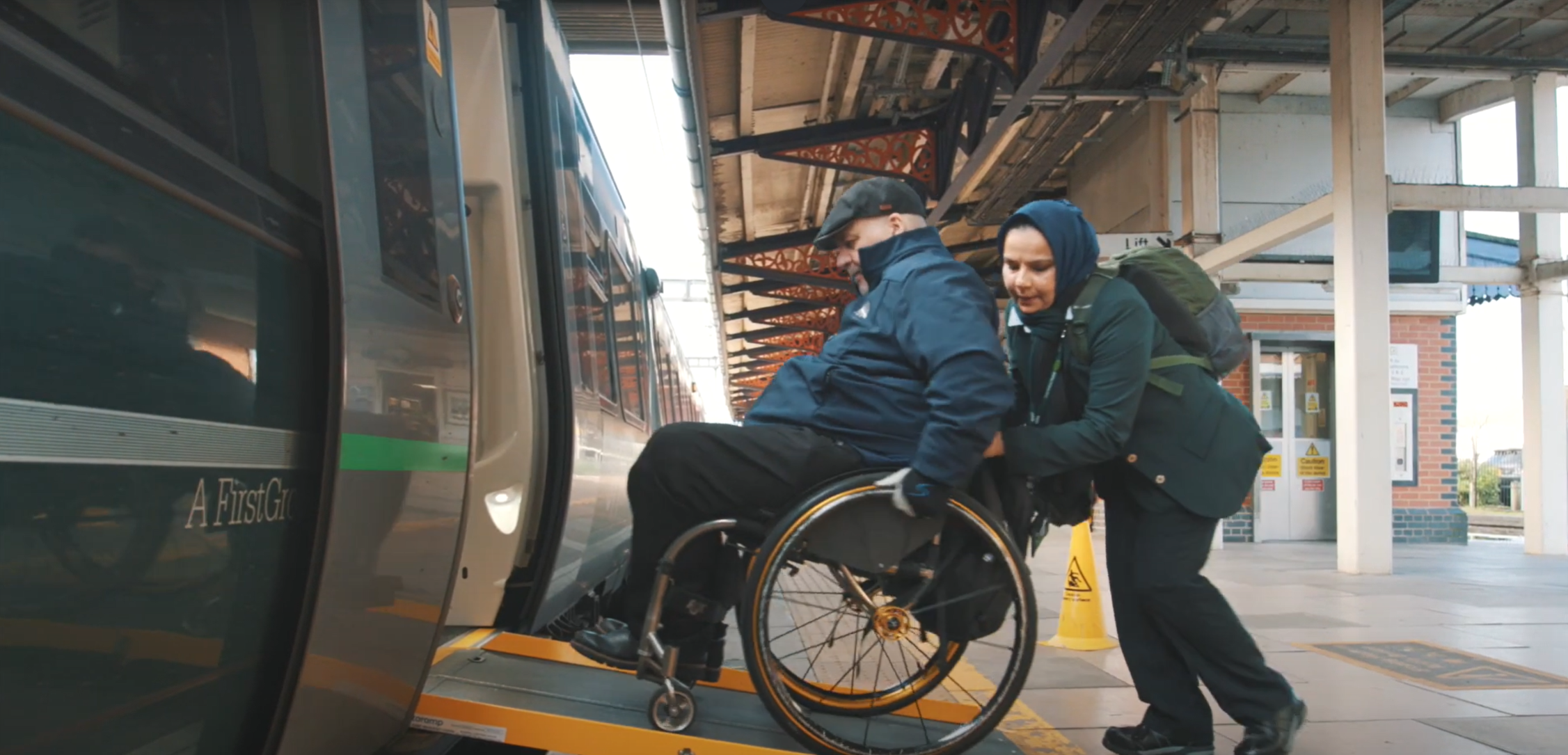
- Ramp Use: You may need to use ramps to board the train that staff will put in place for you. Always check that you’re happy with the placement of the ramps before your use them and request help if needed. For steep ramps, reversing down may be safer—only attempt this if you’re confident, or ask for help.
- Advanced Skills: If you have advanced wheelchair control, you may not require ramps. However, be mindful of space constraints, especially if using power add-ons, which will take a larger turning circle so space inlifts and the train may not be large enough.
- Battery Management: Plan for the full journey, including connections and return travel. Ensure your battery can last the day or bring a charger/spare battery.
- Equipment Dimensions: Know your wheelchair’s size and weight. London Underground use the National Rail/government standard. The standard size: 700mm wide × 1200mm long, up to 300kg (including passenger). A few older trains only support wheelchairs up to 550mm wide.
Personal and care needs
Planning for personal and care needs is vital for a smooth travel experience. This is a basic list of things to consider – for a more a detailed list download a copy of our information sheet.
- Find out where the toilet is, look for signs or ask for help and carry a RADAR key for accessible toilets.
- Maintain skin care routines to prevent pressure ulcers during travel.
- Allow for rest periods to manage tiredness and fatigue.
- Prepare for emotional wellbeing by informing staff of your needs and ensuring assistance is arranged.
Rights and problem-solving strategies
Knowing your rights and how to address issues is important for a stress-free journey.
- Take a moment to pause and take a breath. This will really help you think more clearly and speak with calmness.
- Document any issues for future reference or complaints. For example take a photo if its appropriate and safe to do so and make a note of the time day and location.
- Understand that frustrations with accessibility are valid and seek support when needed. It’s ok to feel frustrated and your are not inconveniencing anyone by expecting basic access services.
- Report safety concerns to staff or the British Transport Police.