Wheelchair Cushion
It is important to make sure you have the right cushion to go with your wheelchair. This information explains why you need a cushion, the different types, how they can help you, how to look after them, and how to get one or replace one.
This information is for general guidance only. You should discuss your needs with a healthcare professional. You can do this at your wheelchair assessment or contact your wheelchair service or supplier for more detailed advice. Understanding your spinal cord injury and how it affects your mobility and ability to do things, including how this changes as you get older or are unwell, is also important when thinking about wheelchair cushions.
If you have any concerns about your skin such as marks, changes in colour or discomfort please seek professional clinical advice immediately!
Why do I need a cushion?
People with spinal cord injury using a wheelchair are more likely to have skin problems and risk of pressure ulcers (red marks or injuries to the skin due to poor blood flow) because of reduced mobility, sensation and circulation. Because of this, a wheelchair cushion is an essential part of your wheelchair. It provides the padding between you and the hard seat of your wheelchair, helping to protect your skin from the pressure build up that can happen when you sit for a long time. A cushion is also important for helping keep you in the right position in your wheelchair.
Skin and Pressure care
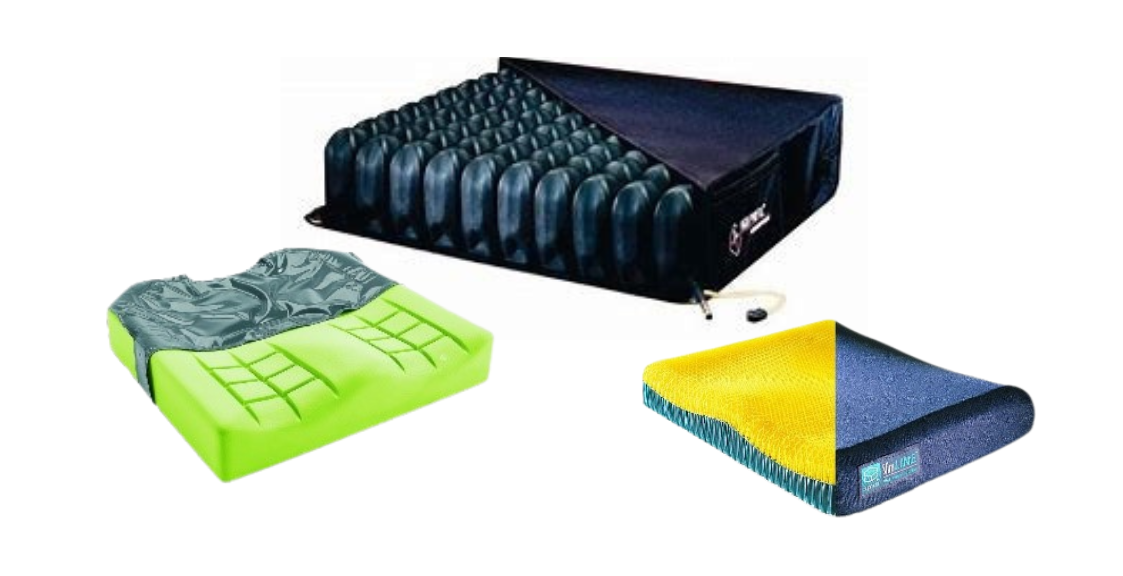
A cushion helps your skin by using special materials ( like foam, gel or air) that allow pressure from your seated body to be reduced and spread across the whole seat (distribution of pressure). There are different levels of pressure care protection, depending on the materials and design used. The levels of pressure care are graded in a range named as low, medium, high or very high.
The grade of cushion you need may be decided by how long you spend sitting in your wheelchair, your ability to move to relieve pressure (pressure relief ) and if you have any history of skin problems. Also If you are unwell, have been unwell, or have noticed your needs have changed over time, may affect the grade of cushion chosen.
For more information visit the SIA Knowledge hub: Skin management and Pressure ulcers factsheet.
What is pressure relief?
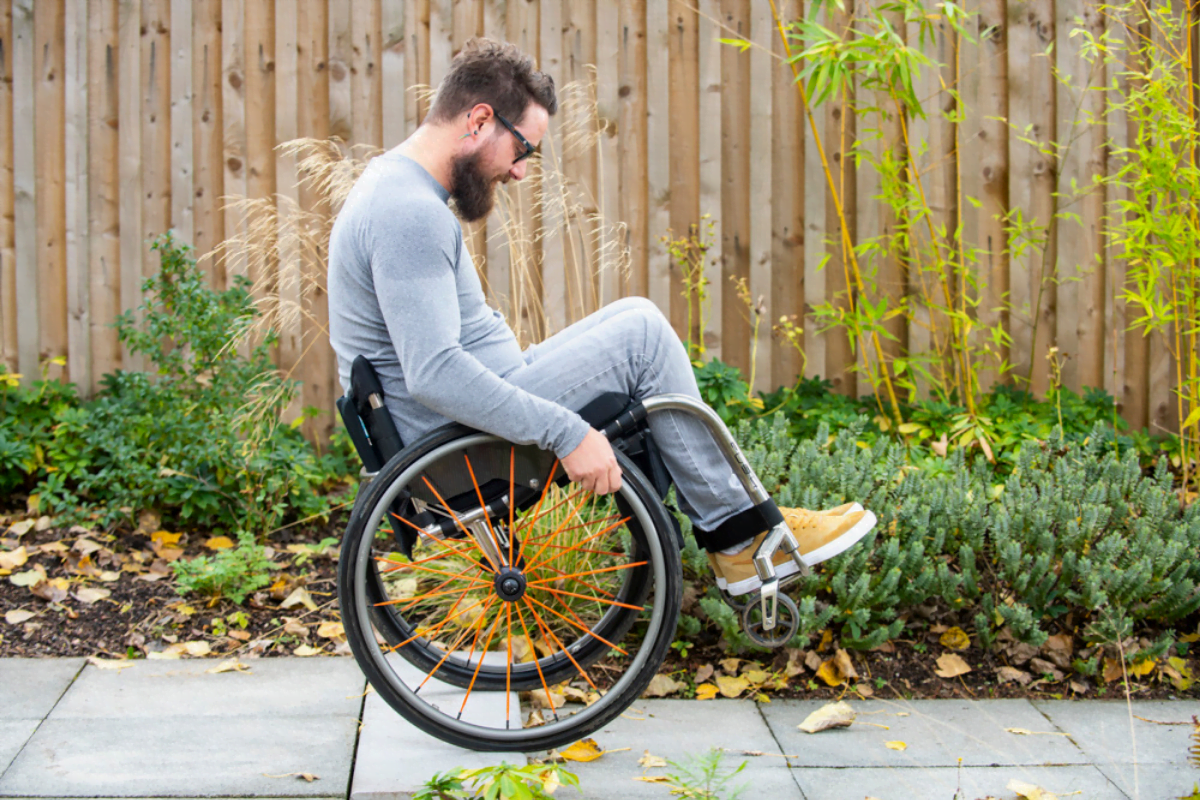
Cushions cannot do all the pressure care themselves., complete pressure care involves you too. It is important you are able to move, or are assisted to move or reposition in your seat to help the blood flow move again. This is called pressure relief. Every hour it is strongly encouraged that you move or shift your position. This can include leaning forward in your wheelchair, or if you have a powered wheelchair, using the tilt function can help redistribute the pressure.
- As well as looking after your pressure care needs, a cushion should also support your skin health. When sitting for long periods, heat and moisture can build up.
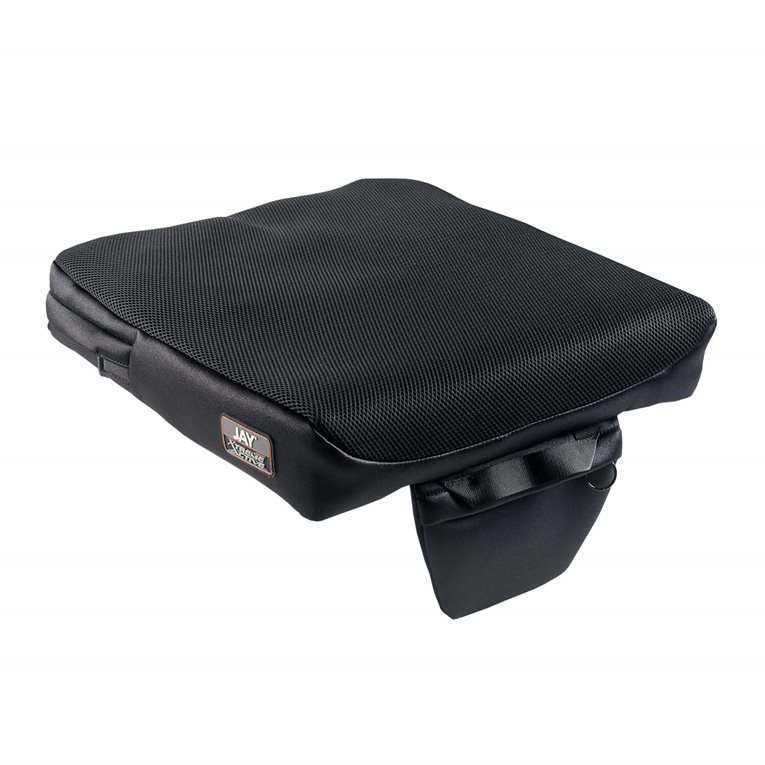
- All cushions have fabric covers. Most are made from a breathable and moisture-wicking fabric (material that takes water away from the surface of the skin) and materials that regulate temperature (help cool you down if you are too hot, for example).
- Always ensure the cushion has a suitable cover.
- Make sure you keep your skin clean and check your skin regularly.
Cushions and support for your body
As well as good pressure care, the cushion should also provide support for your body position and your ability to move and do the things you want to do.
Think about:
- How is your skin, and if you have or had any pressure ulcers.
- The way you sit in your chair and if this is balanced and the same on both sides of your body.
- The way you move when you sit in your wheelchair.
- How well the cushion fits you as you sit in your wheelchair.
- What activities you would like to do everyday, including how often you get in and out of your wheelchair.
Body position
- Cushions with contoured designs can help keep you in the right position and prevent movement when you are seated.
- Be careful with heavily contoured cushions as these can affect how you move sideways across the cushion for a transfer.
- Cushions are available that can have extra parts that can support particular positions that the body needs to stay in, such as supporting the position of the thighs.
Comfort and Stability
- A cushion should provide comfort as well as helping your balance during transfers and daily activities.
- Foam or gel cushions can often provide you with comfort and support.
- Air cushions can be a little less stable due to the way air moves in them.
Weight and how easy the cushion is to carry
- Foam and air cushions tend to be lighter than gel cushions.
- Lightweight cushions are easier to transport and lift in and out of your wheelchair – especially if you transfer frequently or move your wheelchair in and out of a car.