

Making UK beaches accessible to all
SIA member Will Behenna needs your input to help drive change and improve access to our beaches. With over 31,000km of coastline the UK has an abundance of beautiful beaches yet, for many disabled people, the opportunity to enjoy the sea and sand remains out of reach due to poor access.
And while there are brilliant local groups around our coastlines offering accessible facilities and support, what is lacking is a set of clear UK-wide access standards to ensure uniformity of provision, according to outdoor enthusiast Will Behenna.
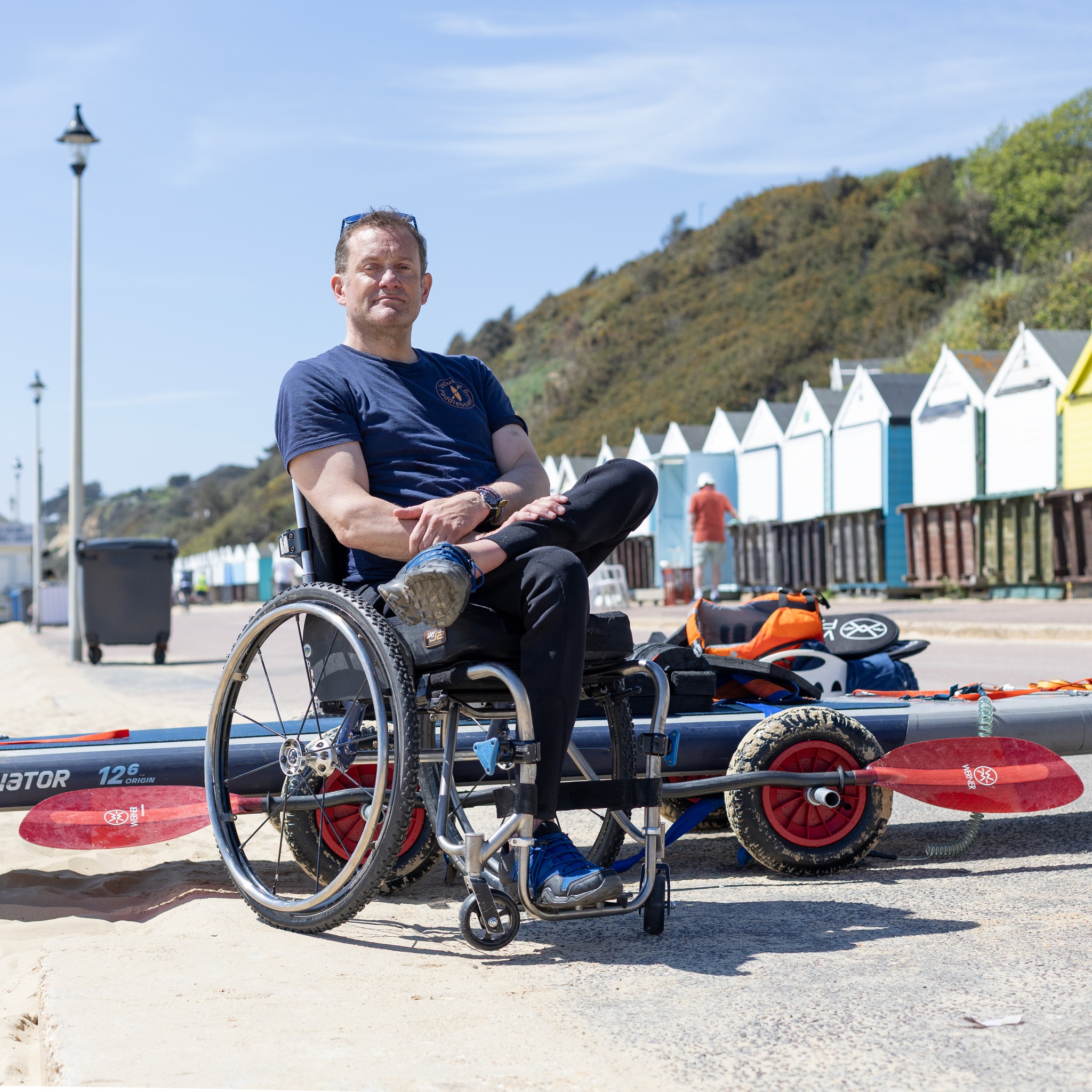
It’s one of the reasons Will, 52, from Wimborne, is working with Bournemouth University on a research project which he hopes marks the beginning of a journey to make beaches more accessible for people with medical conditions and disabilities.
“There’s great evidence around the benefits of access to blue environments such as rivers, lakes and the sea, yet for many, it’s a bit of a postcode lottery as to whether beaches nearby are accessible to you as a disabled person,” says Will.
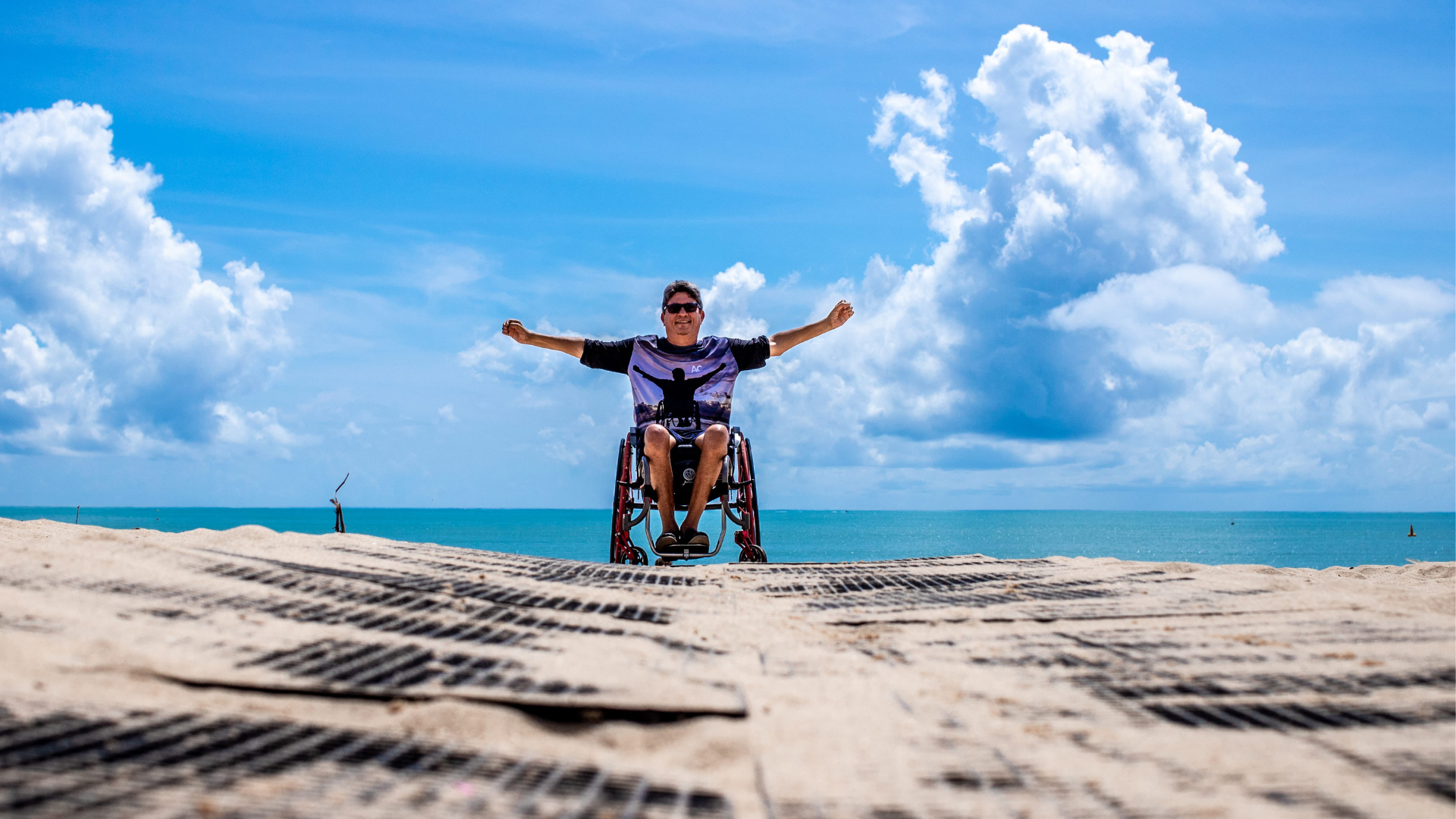
It was a trip to Spain which proved a catalyst for Will. While staying in Alicante, Will was impressed by the accessible facilities and level of provision along the beachfront. From the ample disabled parking to the toilet and changing facilities and on to the boardwalk, beach and water, Will was able to enjoy a seamless and independent experience.
“It felt really empowering to be at the beach and be a part of beach life,” Will, who has a T4 spinal cord injury, said, “If I wanted to use the toilet, or go back into town for a coffee, I could do that easily by myself.”
After contacting Spanish authorities, Will discovered Spain has extensive guidance around accessible provision, which includes a set of access standards for the beach environment. The connection of services like accessible parking to the boardwalk and changing and toilet facilities are integrated into these standards, meaning nothing is overlooked. Additionally, there are support systems wrapped around these services and clear, concise information is available on display boards so disabled beach visitors can easily and independently, plan where they want to go on the beach and how they’re going to get there.
As Will points out, Spain has many more visitors to its beaches than the UK and tourism plays a bit part in its GDP, so there’s an economic incentive alongside its inclusivity agenda.
However, its cohesive, clear guidelines around accessibility that have impressed Will as he’s looked at provision in Spain and in other countries including Greece, Australia and parts of the Middle East. For him, a set of national standards, helps to ensure that accessible provision doesn’t just exist in some places, but across the board.
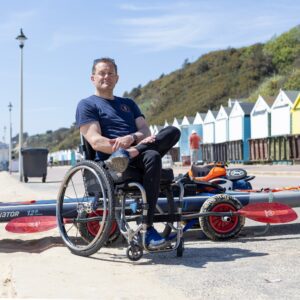
“A lot has been and is being done to make UK green spaces accessible and there are guidelines around pathway provision for example. But in terms of access to the water and facilities like slipways, jetties, pontoons etc, there’s nothing. It means we have these amazing blue spaces across the UK but they’re exclusive to so many groups of people,” he says. “Running inclusivepaddleboarding.co.uk has highlighted the impact of these restrictions to accessing the water. Water-based activities are possible but only with better access.”
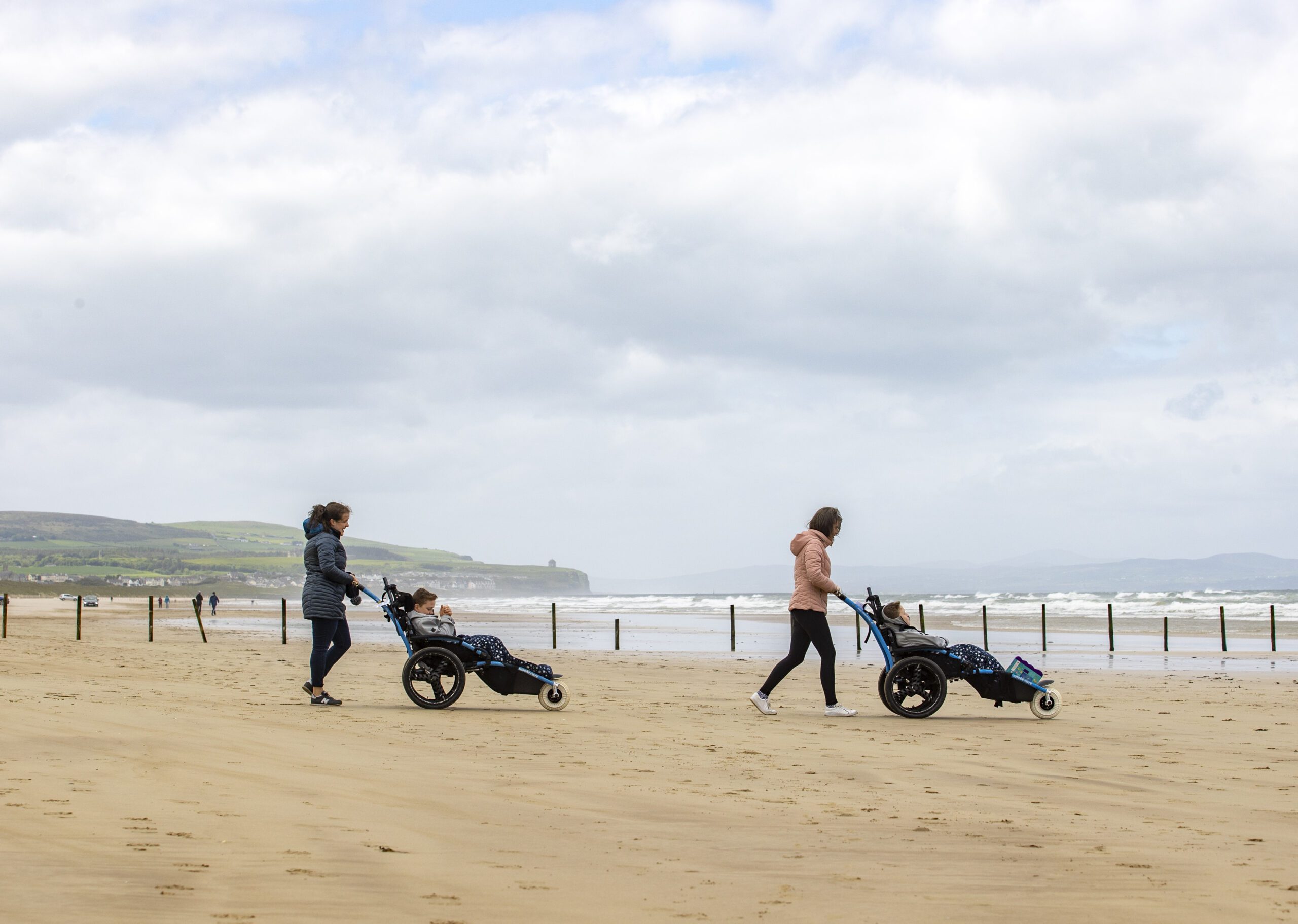
While Will recognises there are great examples around UK coastlines of how communities have made their beaches more accessible through beach wheelchair provision, matting and so on, he believes this relies on the vision and determination of people locally, who start a campaign. It’s his hope that with the correct guidelines in place, provisions such as this would be more widely available rather than just in pockets around the country.
Furthermore, it’s hoped the research Will is doing with Bournemouth University into beach access will provide the evidence needed to drive a national campaign. The team have put together a survey which has gone out to individuals, charities, groups and other relevant parties which support people with medical conditions and disabilities.
“We want to capture people’s experiences of going to the beach and learn what things would make it better for them, and crucially, if accessible provisions were in place, would they be more likely to go. What that gives us is evidence to say, we know what we need to do, we know what it can look like, and we can cost it out.”
Will adds: “Where I live, I’ve got ten miles of beach around me, but I can’t get to the water. I know exactly where my restrictions will be as soon as I get near the sand. I know this will be similar for so many other wheelchair users – that their experience of going to the beach in the UK often stops at the carpark.
“What will make the difference is more joined up working between agencies to get guidelines in place. Now, for example, if you want to build a leisure centre, all engaged parties know what they need to do because of building regulations. Nothing like that exists for our beaches and other waterways. We need a more collective drive.”
Will hopes SIA members will get involved in the project by:
> Filling out and sharing the survey with others.
> Visiting their local beach and doing an access survey (an option after completing the survey)
> Sharing experiences on The Beach Access Project Facebook page.
> Uploading a video of beach experiences.
> Developing a local network and raising awareness of the need for better beach access.