Blog
Finding fulfilment by Lisa Boyle (Spring 2026 - Forward)
SIA’s vision is a fulfilled life for everyone affected by spinal cord injury. Here our support coordinator Lisa Boyle, 57, from Coleraine, Northern Ireland, shares what fulfilment means to her.
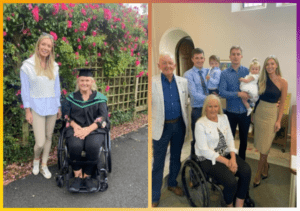
When I sustained my spinal cord injury in July 2015, I believed my life as I knew it was over. Like many people, I equated fulfilment with physical independence, career progression, and the freedom to do the things I loved without thinking twice. In an instant, those assumptions disappeared. What followed was not only a physical injury, but a profound emotional and psychological adjustment that challenged my sense of identity, purpose, and future.
In the early days after my injury, fulfilment felt like an impossible concept. My world became very small, centred on pain management, spasms, hospital routines, and an overwhelming fear of what lay ahead. I mourned not only the loss of walking, but the life I had carefully built — my work, my hobbies, and the role I played within my family. I worried about becoming a burden, about what kind of parent or grandparent I could be from a wheelchair, and whether I would ever truly feel like myself again.
What I did not realise then was that fulfilment does not disappear after spinal cord injury – it changes shape.
Family became my anchor. Their belief in me often carried me when I struggled to believe in myself. Over time, I learned that fulfilment is not about what you can physically do for the people you love, but about being present, connected, and emotionally available.
Becoming a grandparent after my injury brought a kind of joy I had not anticipated. My grandchildren do not see a wheelchair first; they see their Nana. They see someone who listens, laughs, encourages, and loves them fiercely. Through them, I rediscovered a sense of normality and hope, and a reminder that life continues to grow and evolve, even after trauma.
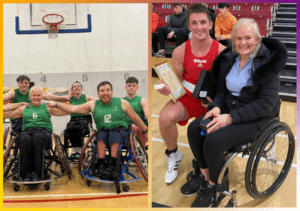
As my confidence slowly returned, I began to explore new ways of challenging myself. Sport played a pivotal role in that journey. Discovering wheelchair basketball reconnected me with my competitive spirit and reminded me that my body, though different, was still capable of strength, teamwork, and achievement. Training, travelling, and setting goals again helped rebuild my self-esteem and sense of identity. Fulfilment came not from trying to return to who I was before, but from embracing who I was becoming.
Purpose has also been central to my sense of fulfilment. Returning to work – particularly with the Spinal Injuries Association – transformed how I viewed my injury. Supporting newly injured people and their families has allowed me to turn lived experience into something meaningful. Being able to sit with someone at the start of their journey and say, “I understand,” carries a weight that cannot be taught. It is a privilege born from adversity, and one that gives my life profound purpose.
That is not to say that fulfilment means constant positivity. There are still difficult days, frustrations, and moments of grief for the life I once had. Fulfilment and struggle coexist. The difference now is that I no longer see those struggles as evidence of failure, but as part of a full and honest life.

Fulfilment after spinal cord injury is deeply personal. It looks different for everyone and unfolds at its own pace. For me, it has been found in family, in sport, in meaningful work, and in connection with others who understand this journey. It has come from accepting support as well as offering it, and from recognising that my value was never dependent on physical ability.
Every year, the month of my accident arrives like a quiet reminder. But now, instead of focusing only on what I’ve lost, I recognise other things – resilience, growth and the life I’ve rebuilt. A life that is fulfilled.
If there is one message I would want others to take away, it is this: spinal cord injury may change your life, but it does not remove the possibility of joy, achievement, or fulfilment. With the right support, belief, and opportunities, life after injury can still be rich, purposeful, and deeply rewarding – sometimes in ways you never expected.
 This article was featured in the Spring 2026 issue of FORWARD, the only magazine dedicated to the spinal cord injury community.
SUBSCRIBE TODAY