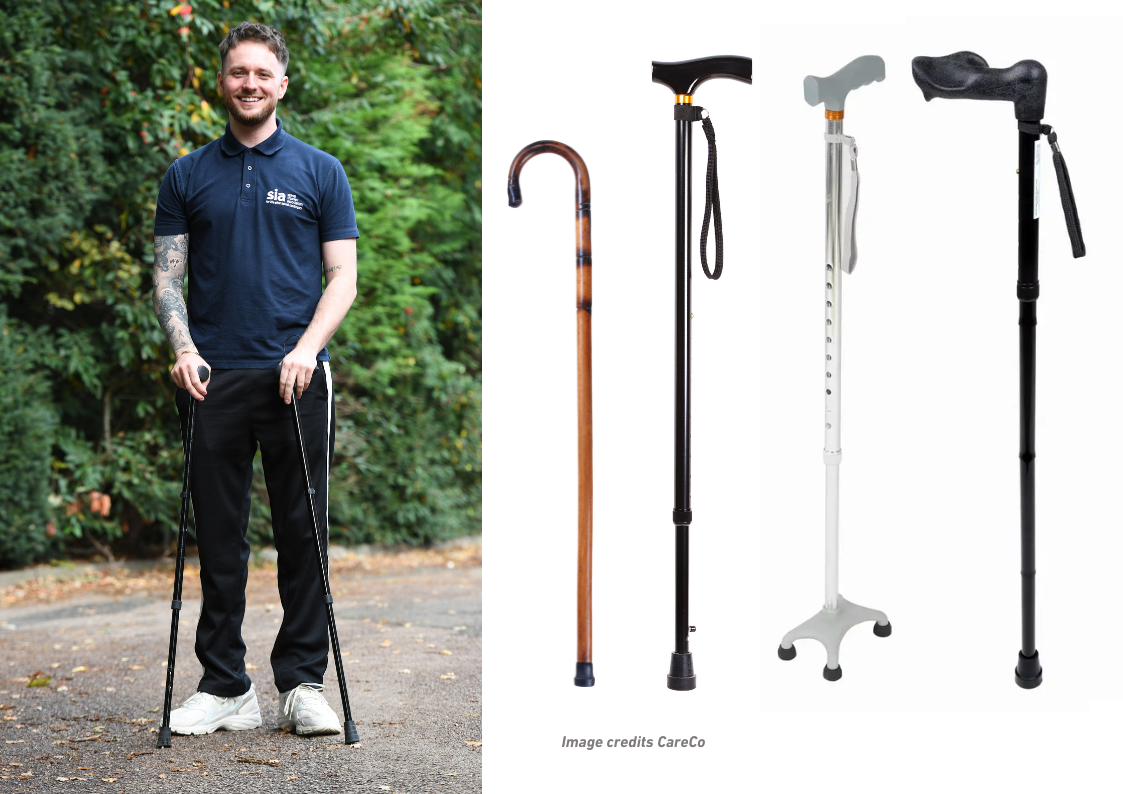
Each person with spinal cord injury (SCI) will have a different level of function. If yours includes the ability to stand or walk, then you may need a walking aid.
This webpage aims to explore which walking aids you might need and why, how to get the walking aids you need, how to look after your equipment and what to do if you think you need a review of your walking aid.
Walking aids can help:
- your balance
- reduce the chance of you having a fall
- support you when you have reduced muscle strength in your legs
- improve your confidence and independence when walking
- you to walk longer distances or over more difficult surfaces
How to get a walking aid
You need to be assessed for a walking aid by a healthcare professional, usually a physiotherapist. Working with you, they’ll decide what you need and what can be provided. If you’re in hospital, then you can speak with your physiotherapist to arrange this. If you’re at home, then you’ll need to be referred to your local community physiotherapy service. You may be able to refer yourself or you might need to ask your GP to do this for you. You can often find the details of your community physiotherapy service by searching on the internet.
You also have the option to purchase a walking aid privately, and there are many companies who offer this equipment. To make sure you get the best possible walking aid for your needs, we’d still recommend you have an assessment with a healthcare professional prior to purchasing any equipment.

Walking aids (information sheet)
Walking sticks
Walking sticks provide light support and balance. They can be made from wood or metal. Some can fold or be adjustable in height. Most have a single point of contact with the floor but there are versions with a tripod/quadripod which are more stable. You may need one or two walking sticks, depending on your ability. It’s important you get them measured to the correct length, so they provide the right support for you and promote a good upright posture.
TIP! If you need a walking stick for the long term, then an ergonomic/moulded handle can be more comfortable and help prevent injuries to your wrist and hand.
Walking frames
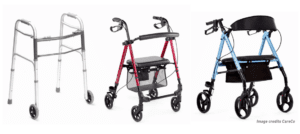
Walking frames can be a good option for people who need more support and stability. There are many different types of frames. The type you need should be assessed by a physiotherapist to see what’s best for you.
Things to think about when choosing a frame:
- How much support do you require?
- Where will you be using the frame (indoors, outdoors or both)?
- What type of ground will you be walking over?
- Do you need to store/transport the frame? (folding frames are available)
- Are there any other features which might be useful to you? (for example basket/brakes/option of a seat)
- Some walking frames have a weight limit, so it’s useful to know your weight.
Walking frames can have two, three or four wheels. Fewer wheels will make the frame easier to move but less steady. Some frames have the option of brakes. The size of the wheels can vary. Smaller wheels will move more quickly and make it easier to turn. Larger wheels can help over outdoor and rougher ground, creating smoother movement.
More basic frames rely on supporting you through your hand and wrist and require you to grip onto the frame. TIP! If your
Elbow crutches
Elbow crutches provide more support and balance than walking sticks. They’re made from aluminium and have a cuff around the forearm to give more support. You may need to use one or two elbow crutches depending on your needs. Elbow crutches are often adjustable in height, and this should be measured accurately by a healthcare professional to make sure they’re supporting you correctly.
TIP! As with walking sticks, elbow crutches can have ergonomic/moulded handles which may be useful for someone who is using them long term.
How do I maintain my walking aid?
It’s important that your walking aid is maintained to make sure it’s safe to use. If you got it through statutory services/NHS provision, they’ll be responsible for maintaining it. If you purchased your walking aid privately, you’ll be responsible for maintenance.
Check your walking aid regularly for signs of wear and tear, making sure you:
- clean the handles
- check the joints/screws are tight
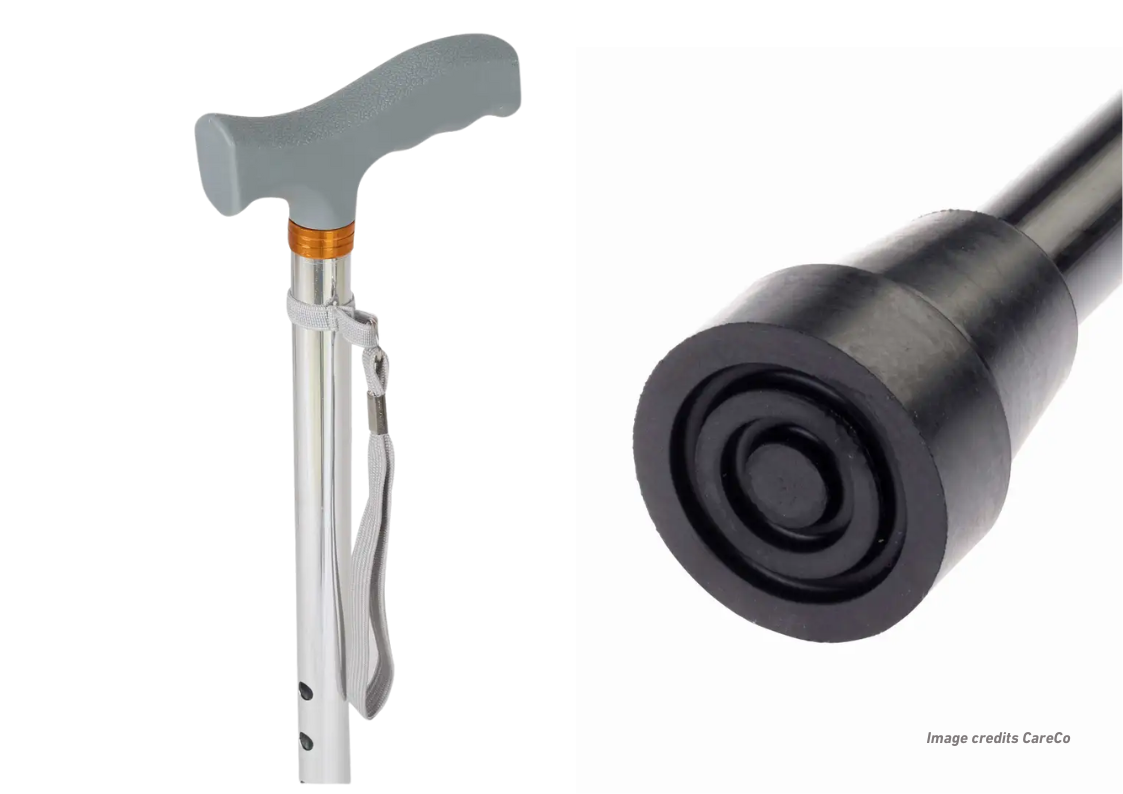
- check ferrules/end tips (see image) for wear and any cracks
- Replace end tips immediately if they’re worn or damaged, as this will affect the safety of your walking aid.
- If you notice any parts are bent, damaged or unstable then get your walking aid replaced immediately.
Review
Your needs may change over time (as you age for example) and it’s important that your walking aid continues to meet your needs. If you think your needs have changed, it’s best to arrange an appointment with a physiotherapist so they can review your needs and your current equipment and make recommendations. As with your original assessment, you may be able to refer yourself or you might need to ask your GP to do this for you. You can often find the details of your community physiotherapy service by searching on the internet.
Important to note…
Although walking aids are there to give you support, over time, they can encourage you to lean forwards, creating a poor posture. It’s important you’re aware of this and make sure you take steps to reduce this risk.
LOOKING AFTER YOUR POSTURE
Private provision/upgrades
It’s important to be aware of the large variety of walking aids available. And whilst statutory services/ NHS have a duty to provide you with a walking aid if you need one, your choice of product can be limited. You may wish to think about privately purchasing a walking aid if you want one that’s lighter weight, has more accessories or looks more pleasing. We still recommend you get assessed by a healthcare professional before you purchase any equipment, to make sure it provides the right support for you.

Information sheets
Bus and coach travel (walking with assistance)
Bus and coach travel are a convenient alternative to car and train travel, allowing you to be independent and return to work and leisure activities as someone who is able to walk with assistance. Read More...

Information sheets
Getting back to driving after spinal cord injury (walking with assistance)
On this page you will find details about driving assessments and learning to drive. It also tells you about equipment to help you get in and out of a car and to help put your. Read More...
Information sheets
Train Travel (walking with assistance)
As a convenient alternative to car and bus travel, train travel allows you to be independent and return to work and leisure activities. Read More...