Your rights on public transport

Your rights on public transport

At SIA we want everyone with a spinal cord injury to live a fulfilled life, and we think being confident to travel is part of this. We know that travelling after a spinal cord injury can feel overwhelming, particularly on public transport when things can happen which are out of your control.

We’ve put together this information sheet to give you practical information about your rights when using public transport. These rights are designed to ensure travel is safe, accessible and dignified. Your local SIA community support group can be great for advice on public transport in your local area and to give you the confidence to give new things a go. 

SIA COMMUNITY GROUPS


General Rights on Public Transport

The following are some general rights that apply to most forms of public transport.

  • Equal access: Transport providers must not discriminate against disabled people.
  • Reasonable adjustments: Services must make adjustments so you can travel (e.g. ramps, priority seating, accessible information).
  • Staff assistance: Staff should provide support where required and trained assistance should be available.
  • Clear information: Travel information should be provided in accessible formats whenever possible.
  • Support with mobility aids: You can bring essential mobility equipment, and operators must take reasonable care of it.

There is specific guidance for each transport type further down the page. It can be frustrating when things go wrong, but we’ve put together some practical tips and coping strategies below to help:

  • Take a moment to pause and take a breath. This will really help you think more clearly and speak calmly.
  • Think about your options: alerting staff immediately to the problem, using help button, or asking someone to help.
  • For example, if the ramp or lift isn’t working, ask for advice and support from the staff, or use the help buttons to call for staff, who should help you with alternative travel options.
  • Check available online resources or notices at the station for nearby accessible routes and options.
  • Think about and explain your needs clearly and calmly – what do you need, and what are the options and alternatives. Take account of any language differences and be mindful that the words related to your individual disability needs may require simpler explanations in some cases.
  • Remember staff should support and assist you to access the alternative transport to your destination.
  • Document what’s happened – maybe take a photo if it’s appropriate and safe to do so, making a note of the time and day and location. This can help in advocating for support or change for better services.
  • Remind yourself – it’s not your fault, and often not the fault of the person you’re talking to either, but a larger system failure. It’s ok to feel frustrated and you are not inconveniencing anyone by expecting basic access to services. Be kind to yourself; managing unexpected barriers takes strength. “I’m handling a tough situation the best I can.”
mindset and resilience


Specific regulation and rights

Bus and Coach

There are regulations in place covering the features and support that should be available on buses and coaches to make them accessible to disabled people.


The regulations involved are:  

  • The Public Service Vehicles (Conduct of Drivers, Inspectors, Conductors and Passengers (Amendment) Regulations 1990 (as amended)
  • The Public Service Vehicles Accessibility Regulations 2000 

It’s useful to note that these regulations do not cover people using a mobility scooter, only a manual or powered wheelchair. There are currently no specific regulations covering mobility scooters.  It can be helpful to contact the bus company for their individual guidance. 


The general principles are: 

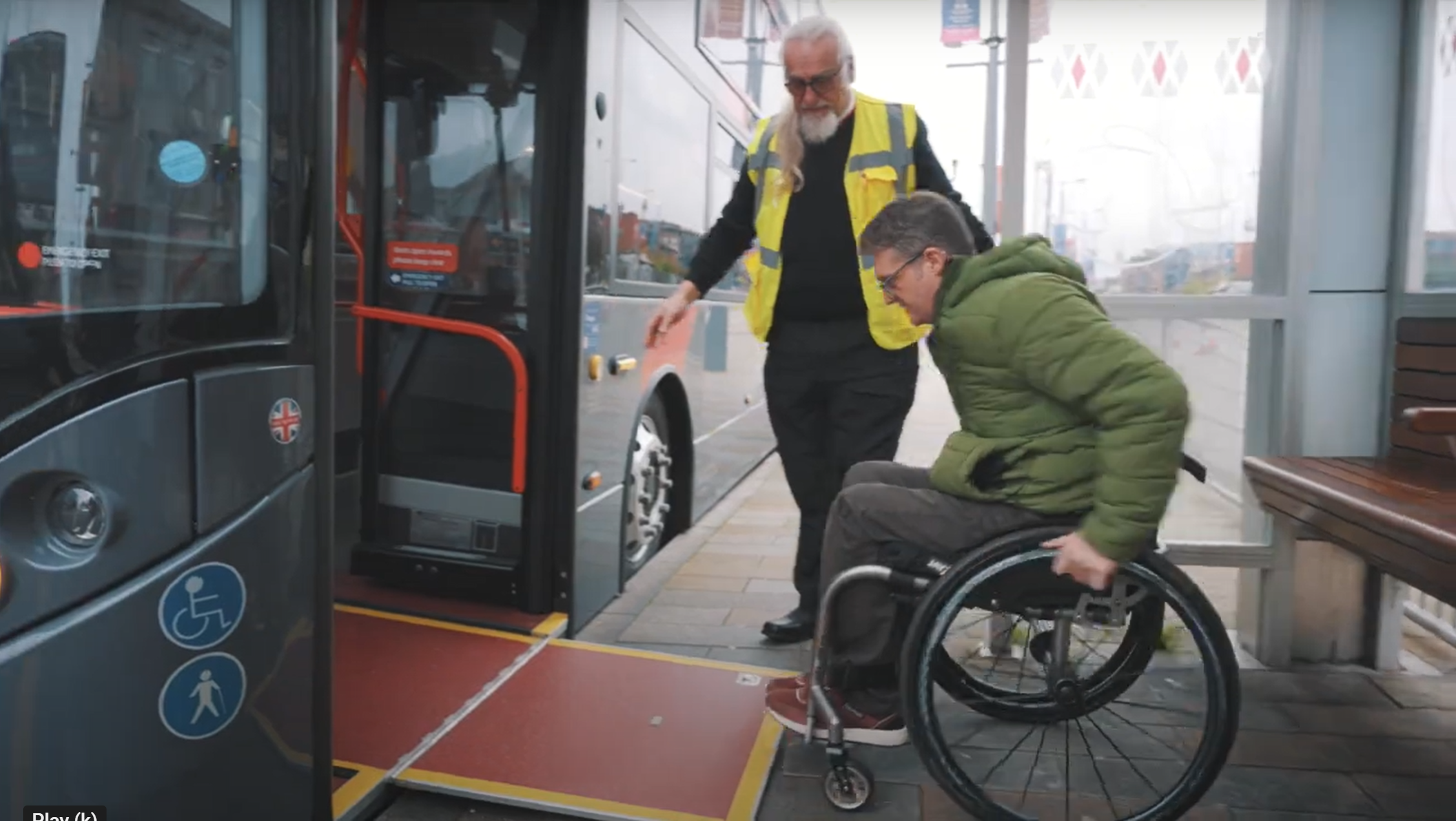
  • Low-floor or ramp-equipped buses must provide wheelchair access. 
  • Priority spaces must be made available for wheelchair users. 
  • Drivers should deploy ramps and provide reasonable assistance. 
  • Assistance dogs must be allowed. 

For more information check out the UK government website.


Bususers.org is a charity dedicated to making public transport inclusive and accessible. It’s also an approved Alternative Dispute Resolution (ADR) for bus and coach passengers to help deal with complaints.    

media image

Train

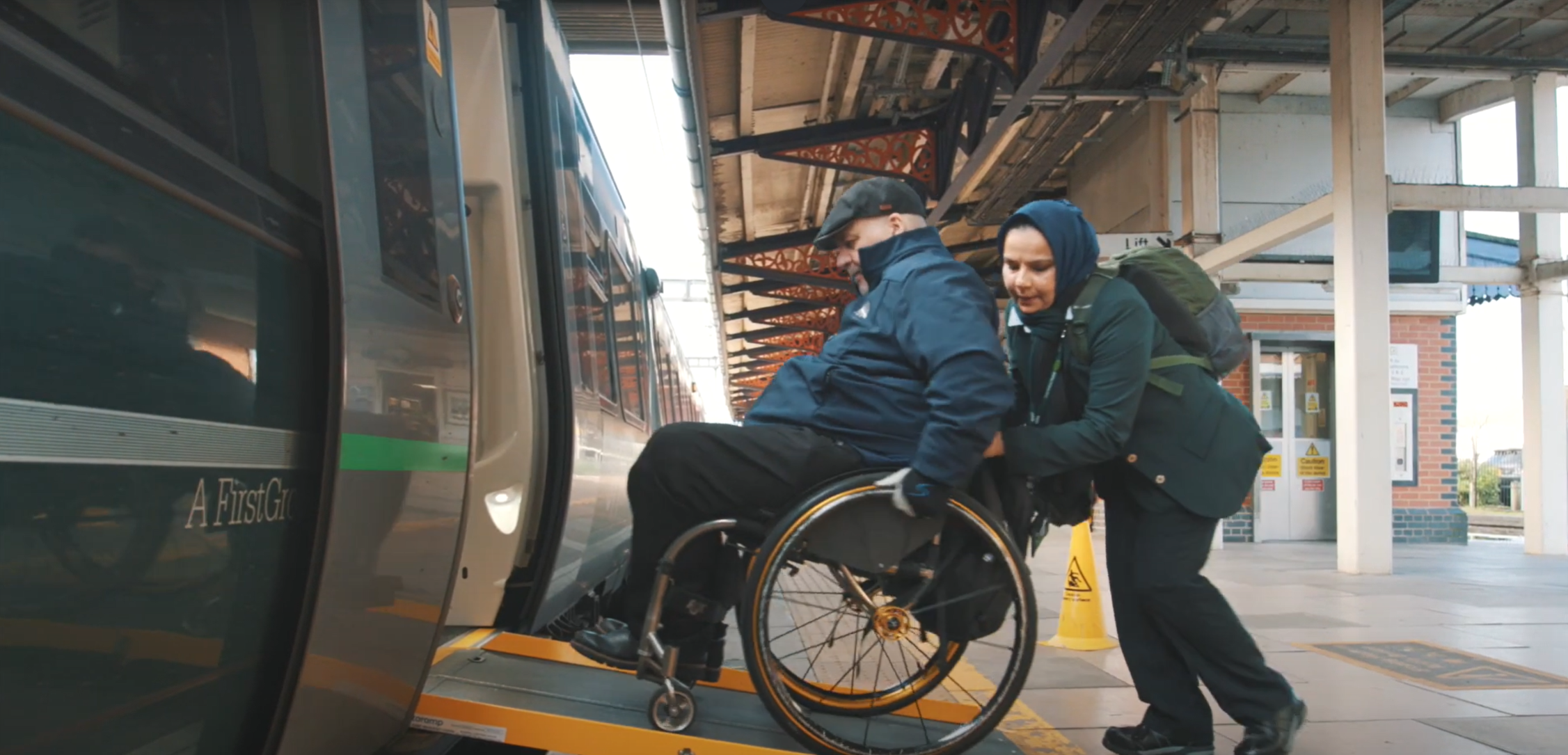
All train and station operators should comply with an accessible travel policy, which sets out the facilities and assistance a disabled passenger can expect. 


As a minimum you should expect:

  • assistance to be provided at all stations
  • alternative accessible transport if a station is inaccessible (at no additional cost)
  • assistance with luggage (as long as this is booked in advance)
  • up-to-date information about accessibility of facilities and services


If this does not happen then you may want to make a formal complaint. You can speak to staff at the time or send your comments to the train operator or National Rail or Transport for London 


If you’re not satisfied with the response, then you can complain to the Rail Ombudsman, an independent body that investigates unresolved complaints.  


Safety concerns: If you have concerns about your security or safety, have seen something unsafe or suspicious, or had an experience of harassment, tell a member of rail staff or a police officer. You can also call the British Transport Police on 0800 40 50 40, or text them on 61016. In an emergency, always call 999. See it. Say it. Sorted

media image

Taxi

It’s against the law for drivers not to take you on a journey because of a disability or for bringing an assistance dog. It’s also against the law for taxi and minicab operators not to book a vehicle for you for those reasons. 


If there are vehicles available and they refuse to take you because of your disability, the driver or operator could be fined up to £1,000 or lose their licence.  This is set out in The Taxis and Private Hire Vehicles (Disabled Persons) Act 2022.  

If problems do occur: 

  • Keep the taxi company’s number handy in case of issues. 
  • Note the driver’s ID or licence number if you need to make a complaint. 
  • Report accessibility issues to local transport authorities if necessary. 

Don’t forget, you can always call the SIA support line for advice if you experience any access problems with taxi travel. 

media image

Ferry and water travel

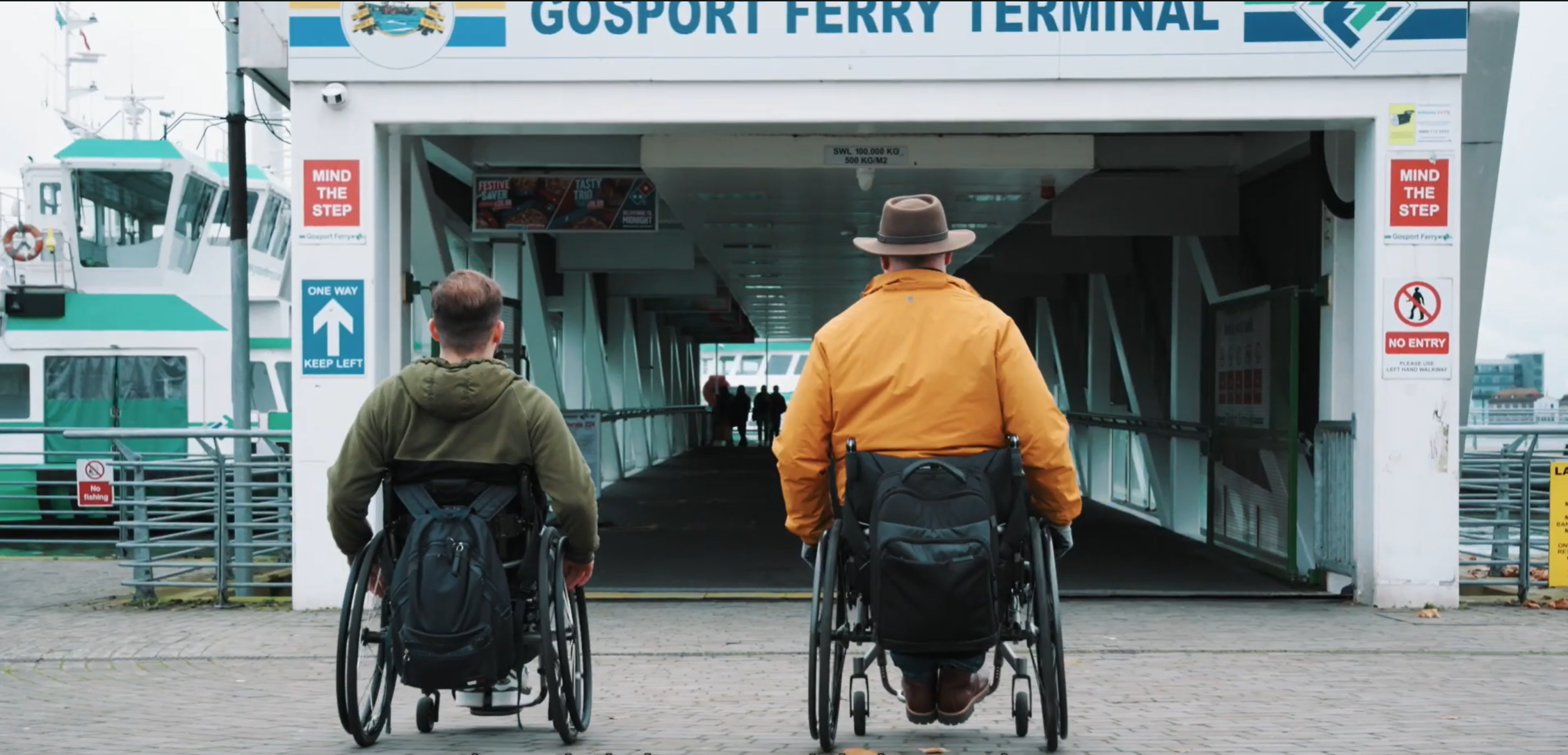
The government website has produced useful information as to your Maritime passenger rights when travelling on water. 


Other useful information: The charity Scope has produced a useful document Right to Ride: a one-stop transport rights guide, developed with the Department of Transport. You can also speak to your Citizens Advice Bureau.

media image

Download the information sheet

Related resources

Mindset and resilience

Mindset and resilience

This sheet has been written by one of SIA’s peer counsellors, who has lived experience of spinal cord injury.     When we think about travel, these are some words that could come to mind: fun,. Read More...

Travelling by Taxi

Travelling by Taxi

Travelling by taxi can provide flexibility and independence for people with a spinal cord injury. It can also be helpful if you don’t plan to return to driving or if you’re still waiting to get an adapted vehicle of. Read More...

Water travel – Ferry

Water travel – Ferry

Our members say they would feel confident travelling by ferry with the right support. Whilst there may be unexpected issues that come up, the following information should help you prepare for your trip. Read More...