Blog
Rolling into the Gym by Cam Treble
Gym accessibility: what gets in the way, how to work round it, and what gyms can do better.
When you’re a wheelchair user, the gym is the best investment you can make. Every transfer, every push up a ramp, every time you lift your chair into the car, you’re using strength you built somewhere. For me, that’s the gym.
But let’s be honest: most gyms weren’t designed with us in mind. The good news is that most of them can be made to work, with a bit of know-how and a bit of nerve.
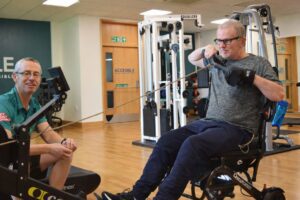
The obstacle course before the workout
Most days it feels like the workout starts before you’ve touched a weight:
- Getting in and around: steps, heavy doors, tight gaps between machines and a kettlebell left right where you need to turn.
- Kit built for legs: fixed seats you can’t move, cable pulleys set sky high, dumbbells racked out of reach, and very few machines you can use straight from your chair.
- Changing rooms: the accessible one is missing, locked, or doubling as a storeroom for mops.
- Staff who want to help but don’t know how: great trainers who’ve never adapted a programme for a spinal injury.
- The stares (real or imagined): being the only person in a chair on the gym floor can make you feel like you’re performing, not training.
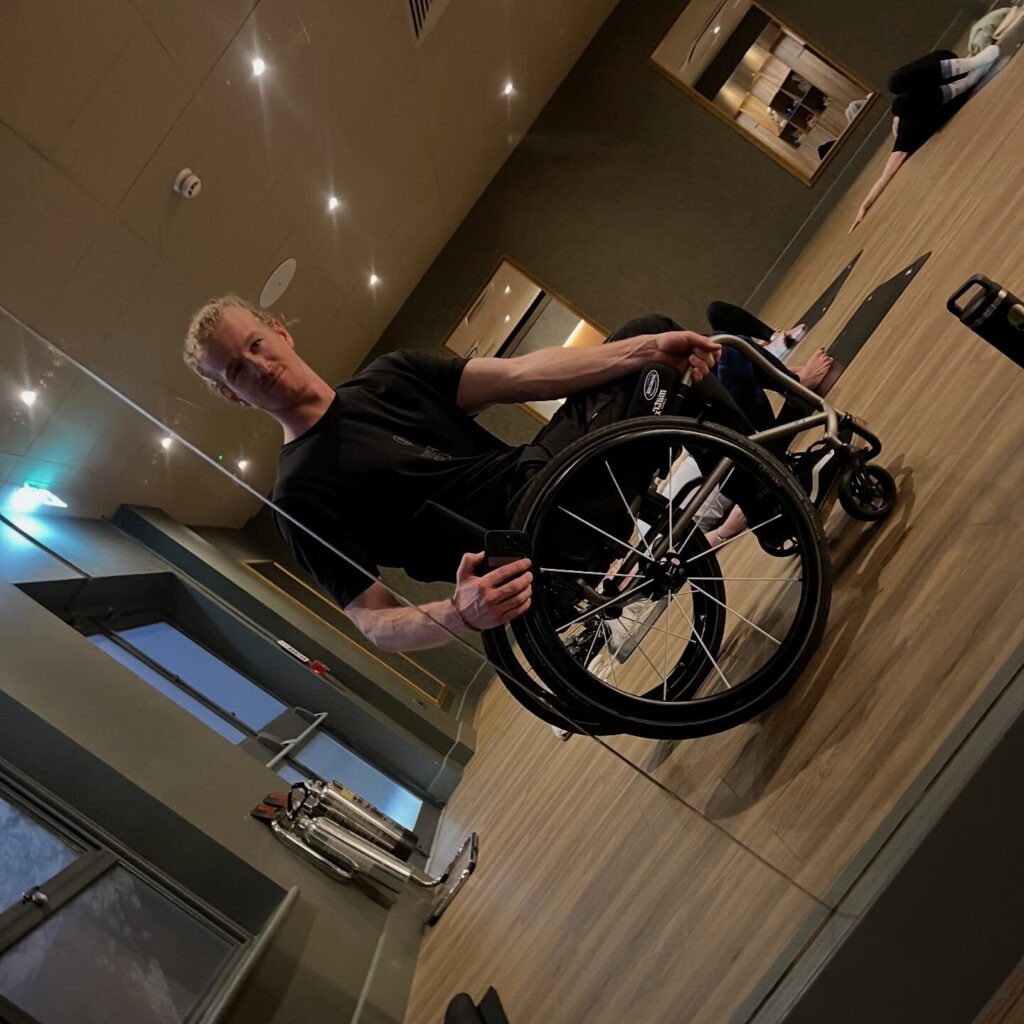
How to make it work for you
- Scout it first. Ask for a tour before you sign up and do the route yourself, car park to gym floor. Ask which machines have removable seats. You’ll learn more in ten minutes than from any website.
- Hack the kit. Cable machines, dumbbells, resistance bands and many pressing machines work brilliantly from your chair once the seat is out of the way. Arm crank and seated rowing machines are great for cardio. Think of the gym as a toolbox, not a set of rules.
- Pick your moment. Go at quieter times while you build your routine and your confidence. Once you know what you’re doing, peak hour stops being scary.
- Get an induction that’s actually about you. Tell staff what you need and what your body can and can’t do. Most of them are keen to help; they just need you to point the way. If they’re out of their depth, find a coach with adaptive or spinal-injury experience, even for a few sessions.
- Pack your secret weapons. Grip aids, wrist wraps and a strap to stabilise your chair can turn an impossible exercise into an easy one.
- Speak up, kindly but clearly. If something blocks your access, tell the manager exactly what and why. Every fix you ask for makes the gym better for the next person who rolls through the door.
Over to the gyms
You don’t need a rebuild to be welcoming. Clear walkways, a few machines with removable seats, kit stored at reachable heights, accessible changing rooms kept for their real purpose, and basic disability training for staff go a very long way. The Activity Alliance and the Inclusive Fitness Initiative are good places to start.
The first visit is the hardest. After that, it’s just your gym. Go and claim your space and make the everyday easier.
Cam, SIA Champion for Sport

MEET CAMFOLLOW CAM ON INSTAGRAM
SIA champions represent our vision of a fulfilled life for everyone affected by spinal cord injury.
Experts in their own field, they share their knowledge, experience and achievements to educate and inspire others in diverse areas such as outdoor adventure, business and the arts. Each of our champions brings the SCI community together to support and encourage others with shared interests to prove that with the right support anything is possible.