News
NHS Modernisation Bill and Spinal Cord Injury Services
During a debate on the NHS Modernisation Bill on 1 June 2026 Andy McDonald MP, Chair of the All-Party Parliamentary Group on Spinal Cord Injury, spoke about the importance of national oversight and coordination for spinal cord injury services.
Transcript
“The principal reason I rise today is as chair of the all-party parliamentary group on spinal cord injury. Last summer, the APPG’s inquiry into spinal cord injury services reached a clear conclusion: the evidence points to the need for more national co-ordination, not less. Spinal cord injury is a low-volume but highly complex condition requiring specialist pathways, lifelong rehabilitation and co-ordinated support, yet the inquiry heard repeated evidence of fragmented services, postcode variation, delayed rehabilitation and patients being lost within the system. The APPG therefore called for a national strategy and a modern service framework for spinal cord injury care. As we intend to hold a lived experience roundtable shortly, I invite the Health Secretary to come and meet people with spinal cord injury to hear their concerns about the proposed changes to commissioning.
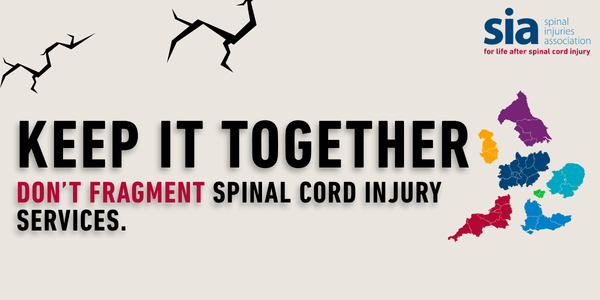
We welcome the excellent constructive engagement from the Under-Secretary of State for Health and Social Care, my hon. Friend Mrs Hodgson, and NHS England officials, but we remain deeply concerned about proposals to transfer spinal cord injury commissioning from national oversight to integrated care boards. Indeed, NHS England’s own evidence to the inquiry emphasised national standards, national quality metrics and nationally co-ordinated pathways, quality measures and oversight. If national consistency has not yet been achieved under national commissioning, what evidence demonstrates that transferring responsibility to multiple ICBs will improve outcomes or equity?
What is at stake is not abstract. When somebody sustains a spinal cord injury, their life changes overnight. They may require specialist rehabilitation, housing support, benefits advice, mental health support and long-term clinical care. Patients and families should not be left to navigate a fragmented system alone. That is why I welcome the ambition behind the single patient record and Diagnosis Connect.
Connecting newly diagnosed patients directly to specialist support reflects one of the APPG’s recommendations. Organisations such as the Spinal Injuries Association help people rebuild their lives after life-changing injury. I hope that Ministers will consider including spinal cord injury within the early phases of Diagnosis Connect.
The question is not whether structures change on paper; it is whether people living with spinal cord injury will experience safer, more equitable, more co-ordinated care. I hope that the Secretary of State will answer some straightforward questions. If NHS England accepts that national consistency has not yet been achieved, what evidence shows that localised commissioning will improve it? How will national standards, benchmarking and quality oversight remain coherent under a fragmented arrangement? Do the Government accept that spinal cord injury differs fundamentally from standard population health commissioning because of its low volume, high complexity and cross-boundary nature? What safeguards will prevent widening regional inequity, if accountability is dispersed across multiple ICBs?
The APPG’s inquiry concluded that spinal cord injury services require stronger national co-ordination and oversight, not greater fragmentation, and I hope the Government will reflect carefully on that evidence. This country led the world in spinal cord injury provision under the leadership of Professor Ludwig Guttmann after the second world war, with the remarkable work that he achieved. We need to return to those days of being pioneering and world-class. As a lawyer who previously practised in this area, I am afraid that over the past several decades services have deteriorated and gone backwards. We must restore those services and bring trust to people who so desperately want reassurance that there is a national system for them to rely on that will address their needs. We are currently not in that place at all. The Bill is an opportunity to address that, and I trust the Minister will take that on board.”
Next steps
On Spinal Cord Injury Awareness Day, we asked that you wrote to your MP about the proposed changes to spinal cord injury services and would like to thank everyone who has done so. By writing to your MP, you make sure that they understand the impact on their constituents, and would encourage anyone who hasn’t done so to write to their MP – a template letter is available on our website.
As this issue progresses, we will provide further updates on the impact of proposals to change commissioning of spinal cord injury services and the wider NHS Modernisation Bill via our social media, website, The Voice, and Forward.